
Commercial Photography at a Congressional Record Ceremony in Pharr, Texas
On August 13, 2026, I was invited to help photograph Congresswoman Monica De La Cruz‘s Congressional Record Ceremony in Pharr, Texas.
I’ve covered plenty of government and community events over the years, but this one was a little different. The people being recognized weren’t simply receiving another award or plaque. Their accomplishments, service and stories had been entered into the Congressional Record. That’s a pretty big accomplishment when you stop and think about it.
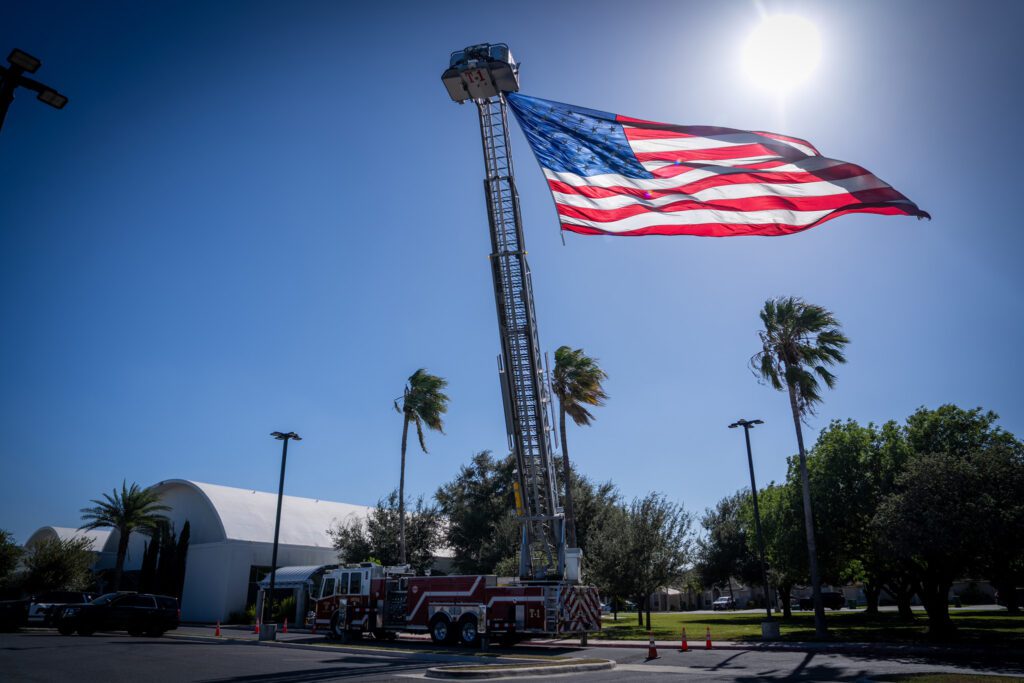
I actually made that photograph before I ever walked inside.
The Pharr Fire Department had this enormous American flag hanging from its ladder truck. The wind was moving it around, the palm trees were moving with it, and the South Texas sun was doing what the South Texas sun does.
Before photographing any event, I always try to find something that establishes where I am and gives the viewer a sense of the day.
That was it.
What Is a Congressional Record Ceremony?
I knew what the Congressional Record was in a general sense, but I had never really stopped to think about what it means when somebody from here in the Rio Grande Valley actually becomes part of it.
The Congressional Record is the official published record of the proceedings of the United States Congress. Members of Congress can also submit remarks recognizing people, organizations and accomplishments from their districts.
Congresswoman De La Cruz’s ceremony recognized South Texans whose accomplishments and service had been entered into that permanent record.
So I wouldn’t really call these traditional awards.
These were people’s stories being formally recognized and preserved.
That made the event a little more interesting to photograph.
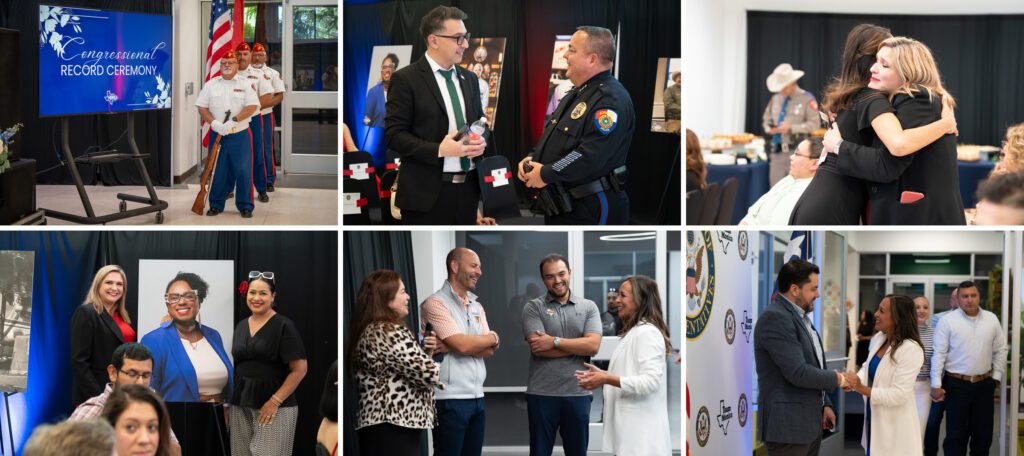
The Story Starts Before the Program Does
One thing I’ve learned doing commercial photography is that an event doesn’t begin when somebody walks up to the microphone.
It starts when people walk through the door.
People were greeting each other, catching up, shaking hands and introducing family members. Law-enforcement officers were talking with guests. Honorees were arriving. There were hugs and plenty of conversations happening around the room.
Those are the photos I always hunt for. The formal photographs tell you what happened. The candid ones usually tell you what it felt like.
And because this is the Rio Grande Valley, there were plenty of familiar faces.
I also remembered Monica from years ago when we both crossed paths through NHPO here in the Valley. I served with the organization for several years myself.
I couldn’t tell you the exact year anymore, and NHPO wasn’t exactly famous for keeping perfect records, but I remember the people.
South Texas really can be a small place.
Everything Became Formal
Once the ceremony started, the atmosphere changed quickly.
There was a color guard.
Bagpipes.
Flags.
Uniformed officers and veterans.
Everybody stood.
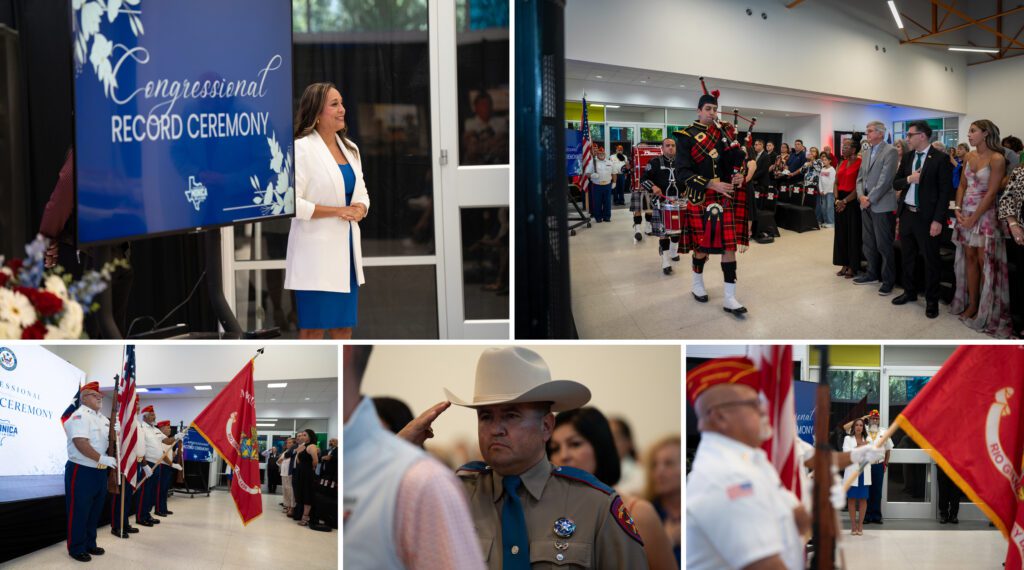
This is where covering an event gets interesting from a photography standpoint.
There’s an obvious photograph directly in front of you, but there may be three other pictures happening at exactly the same time.
Someone is coming down the aisle.
Someone else is saluting.
The flag is moving into position.
The audience is reacting.
You have to keep looking around.
You don’t get to stop everybody and ask them to do it again because you were pointed in the wrong direction.
Some Photographs Simply Cannot Be Missed
There is also a practical side to government event photography.
The client needs certain photographs.
Period.
The speaker at the podium.
The room.
The presentations.
The honorees.
The Congressional Record.
The handshakes.
The group photographs.
Those pictures have to be there when the gallery is delivered.
That doesn’t mean I stop looking for better photos. It just means I make sure the assignment is covered before I start worrying about being clever.
The photographer’s favorite image and the client’s most useful image aren’t always the same photograph.
A professional photographer needs to come back with both.
Every Recognition Had a Different Story
Once the presentations began, I started understanding why the event mattered.
There wasn’t one type of person being recognized.
There were educators, law-enforcement officers, veterans, businesses, athletes and people who had spent years serving the community.
Some recognitions were celebratory.
Others were much more emotional.
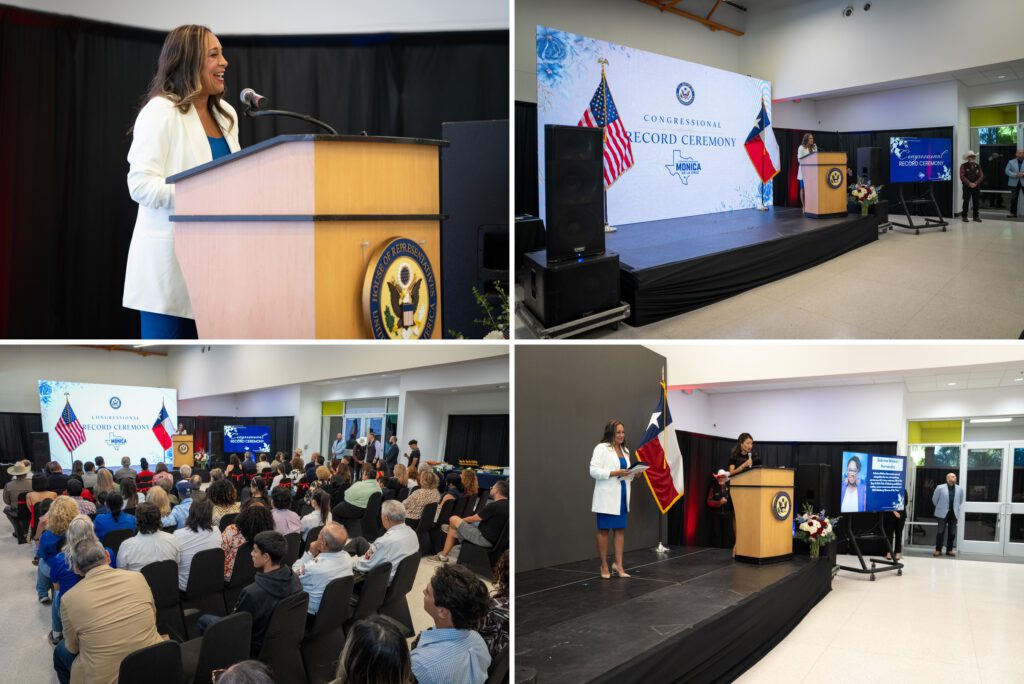
That’s something a program or schedule can’t really tell you.
One minute people are laughing.
A few minutes later the room gets quiet.
Somebody starts talking about a person’s life, service or something they went through, and suddenly the mood changes completely.
As the photographer, I’m watching all of it.
Sometimes the photograph isn’t the person speaking.
Sometimes it’s the person listening.
Covering an Elected Official Without Turning It Into Politics
Since this assignment involved a member of Congress, I think this is worth saying.
I’ve photographed elected officials and government organizations for years (The first major one was Bill Clinton coming to Mission back in the late 90s).
For me, photographing an event isn’t about choosing a political side.
Politics and the constant arguing around it were actually part of the reason I backed away from social media. I got tired of everything turning into a fight.
Photography is different for me.
I’m there to document the people, the work and what happened. I’m not there to tell anybody who they should vote for.
This wasn’t a campaign rally.
It was a Congressional Record Ceremony recognizing people from South Texas.
That’s the story I was there to photograph.
And really, I enjoy the work a lot more when I approach it that way.
I Keep Shooting After the Official Picture
Some of my favorite photographs from assignments like this happen after everybody thinks the photograph is finished.
The official presentation happens.
Everybody looks at the camera.
I make the picture.
Then they relax.
Somebody starts looking through the Congressional Record they were just handed.
They laugh.
They say something to the person next to them.
They hug.
That’s when I keep shooting.
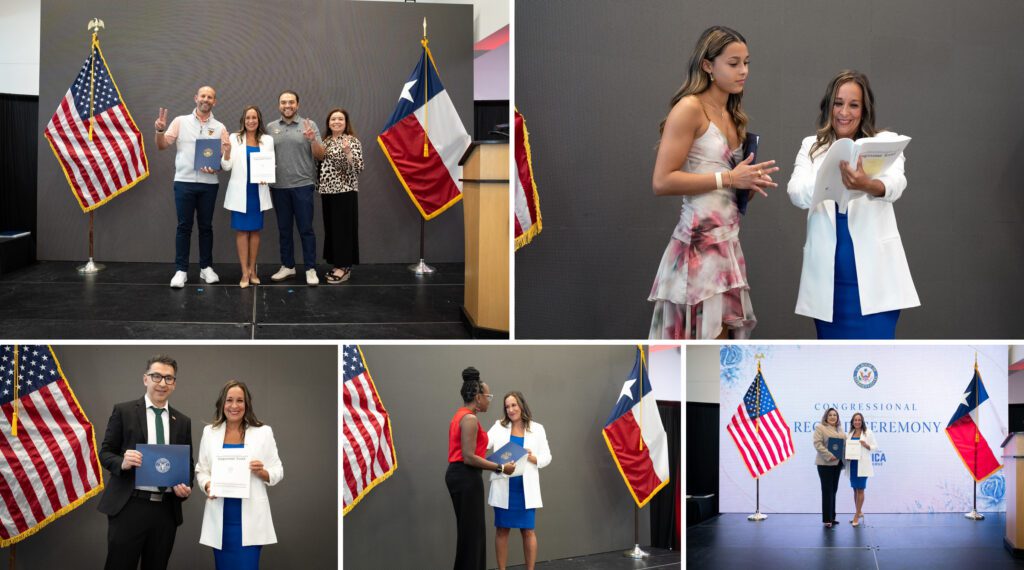
Those little moments are what make a gallery feel complete instead of looking like 150 versions of the same handshake.
They’re also usually the photographs people remember.
What I Look for When Photographing a Government Event
When I’m covering a government, corporate or community event, I’m trying to create a complete visual record of what happened.
That usually means looking for:
- A strong establishing photograph
- Speakers and officials
- Important presentations
- Wide photographs showing the room
- Honorees and their families
- Audience reactions
- Signage and details
- Formal photographs the client knows they’ll need
- Candid moments nobody could have planned
- Horizontal and vertical photographs that can actually be used later
That last part matters.
A communications department may need one photograph for a press release and another for Instagram. A newspaper may need something horizontal. A family member may just want the photograph where everybody is smiling.
Commercial photography has to be good photography, but it also has to be useful photography.
Photographing Something Worth Remembering
By the end of the ceremony, I understood the assignment differently than I had when I walked through the door.
I wasn’t really photographing politics.
I was photographing people from the Rio Grande Valley whose accomplishments, service or lives had been considered important enough to become part of the Congressional Record.
Photography does something similar on a much smaller scale.
It preserves what the room looked like.
Who was there.
Who laughed.
Who hugged.
Who saluted.
Who stood at the microphone.
And what someone’s face looked like when they were handed something recognizing what they had done.
That’s one of the reasons I still enjoy commercial photography after all these years.
The assignments change.
The people change.
The equipment definitely changes.
The storytelling part really doesn’t.
You show up.
You pay attention.
And when something worth remembering happens, you make the photograph.