Photographing the UTRGV Driscoll Tailgate & 2026 Home Opener

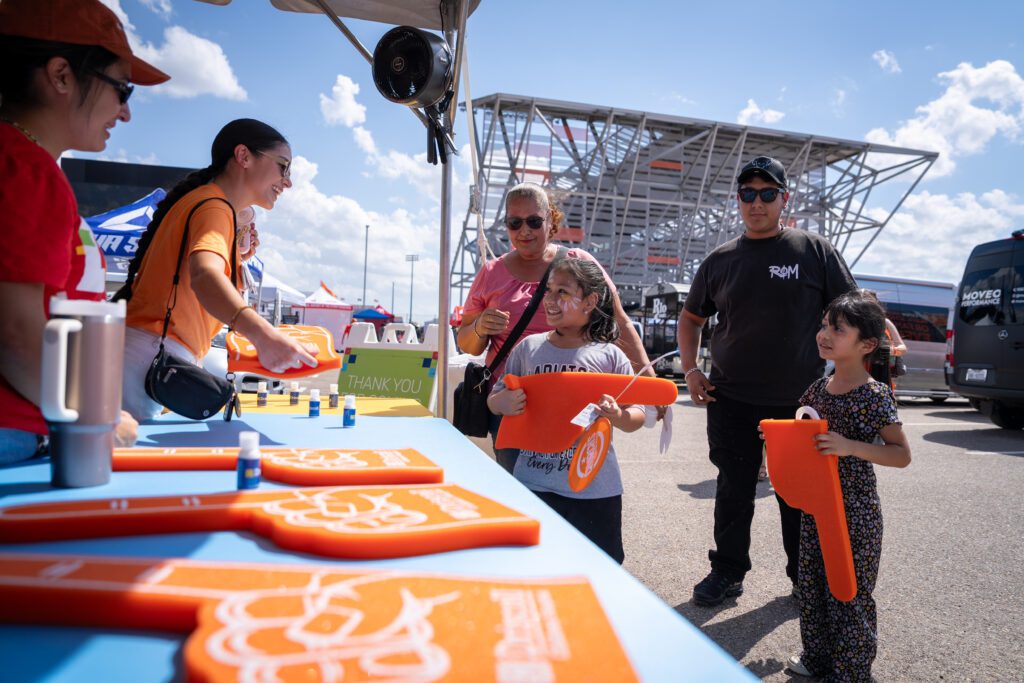
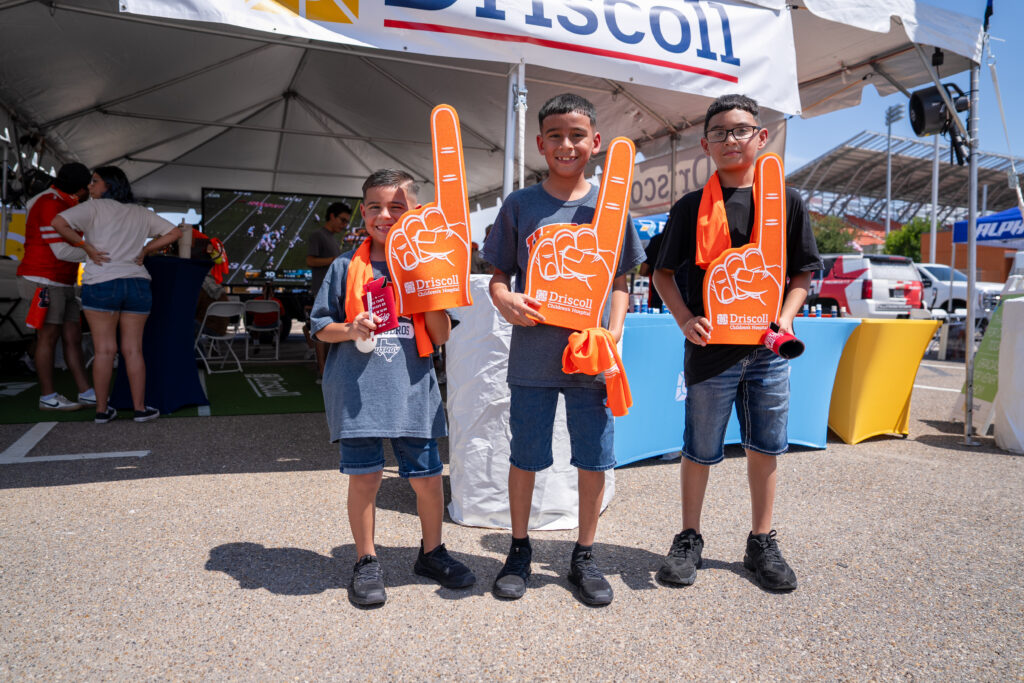
Yesterday I got to spend part of the afternoon and evening photographing the Driscoll Children’s Hospital area at the UTRGV tailgate before the Vaqueros kicked off their 2026 football season.

NOW that was a fun assignment!

I was out there for a few hours photographing people coming through the Driscoll tailgate area, families stopping by and just trying to capture what was going on around the tailgate.

There were Vaquero colors everywhere and you could tell people were ready for football to be back. I also got to catch up with some of the other groups that were out there, including Rio Bank and one of the local radio stations. One of the nice things about doing this for as long as I have is running into people I’ve worked around over the years.

One of my favorite things to photograph was actually pretty simple.  Driscoll was giving out these huge foam fingers and the kids loved them.  Their reactions were great. Those are usually the pictures I like anyway. Not necessarily the big posed moment, but the little things happening around it. A kid getting excited, somebody laughing or people just enjoying themselves.

Eventually it was game time and everybody started making their way inside.

By then my assignment was getting pretty easy. I photographed some of the Driscoll signage around the stadium and stayed for a little while after kickoff.

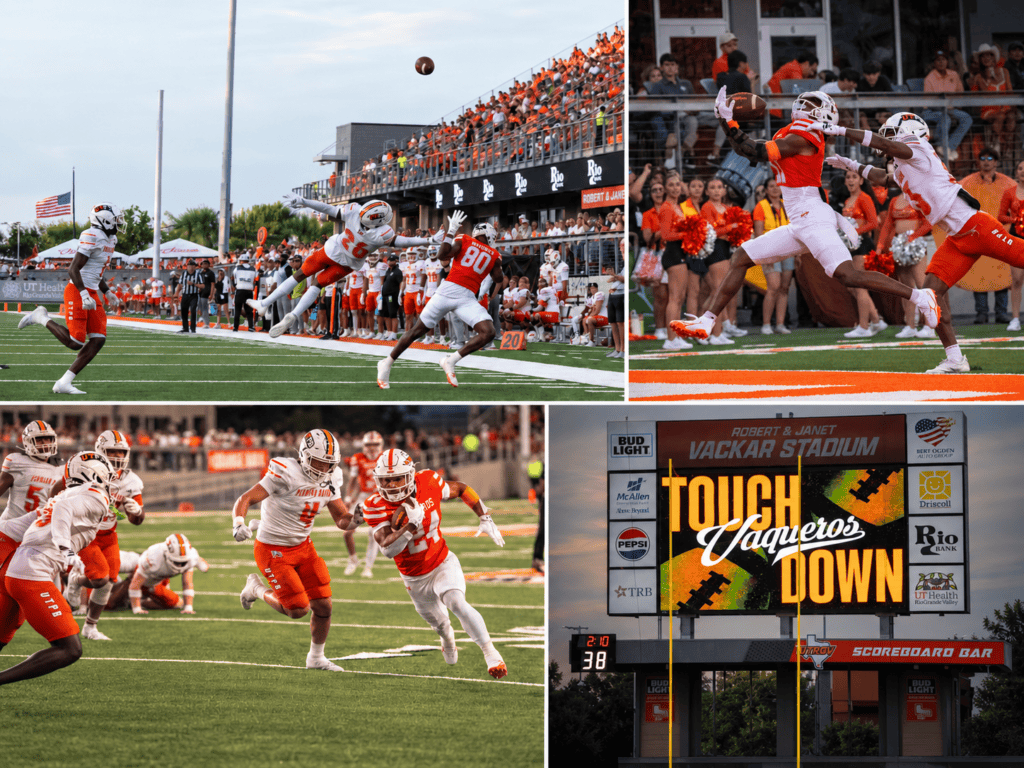
I even got to shoot some football.

I haven’t photographed sports in a few years, so I was curious to see if I was rusty.

Thankfully, I wasn’t too bad.

Sports photography actually goes way back for me. I started shooting sports in high school, and later I got the chance to help out with our local CHL hockey team. That was really when I started falling in love with photography.  So being back on the field with a camera was a lot of fun and kind of felt like I never left.

UTRGV ended up beating UT Permian Basin 44-0, and apparently the crowd really was as big as it felt. They had 13,698 people there, a new program record.  (Not a bad way to start the season).

But probably my favorite part of the night happened after I was pretty much finished.  I took a minute and sat down on the edge of the field.  The teams and the other photographers were way down at the other end, so for a few minutes I basically had the whole end zone to myself.  I just sat there and looked around.  And it hit me.  I graduated from UTPA in 1999, long before it became UTRGV, and there is no way I would have imagined back then that one day our university would have a football team.  I always thought that if somebody ever figured out how to make college football happen down here, it would be huge. The 956 is football country.  (Then again, I guess all of Texas is football country).

But sitting there looking at the stadium, the field, the lights and all those people, I couldn’t help wondering how different some of my weekends in college would have been if we’d had something like this to look forward to.  This is only UTRGV football’s second season and the excitement doesn’t seem to be going anywhere. If anything, it feels bigger.

I hope that never dies.

Maybe one of these days I’ll get to come back without cameras hanging off of me, buy a ticket, sit in the stands and just enjoy a game.

Yesterday wasn’t that day.

But I did get to sit in the end zone by myself for a couple of minutes and take it all in.

The best seat in the house.

Event Photography at the 2026 Easterseals Rio Grande Valley Telethon

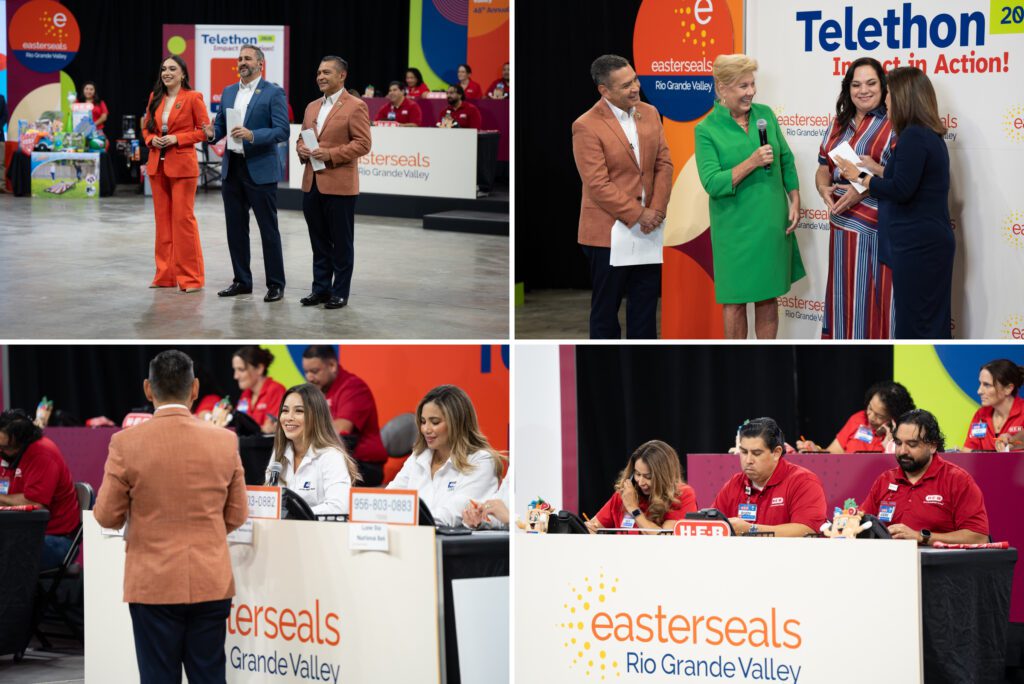
I was invited back to photograph the 2026 Easterseals Rio Grande Valley Telethon, and just like last year, it was held at the Burt Ogden Arena in Edinburg.

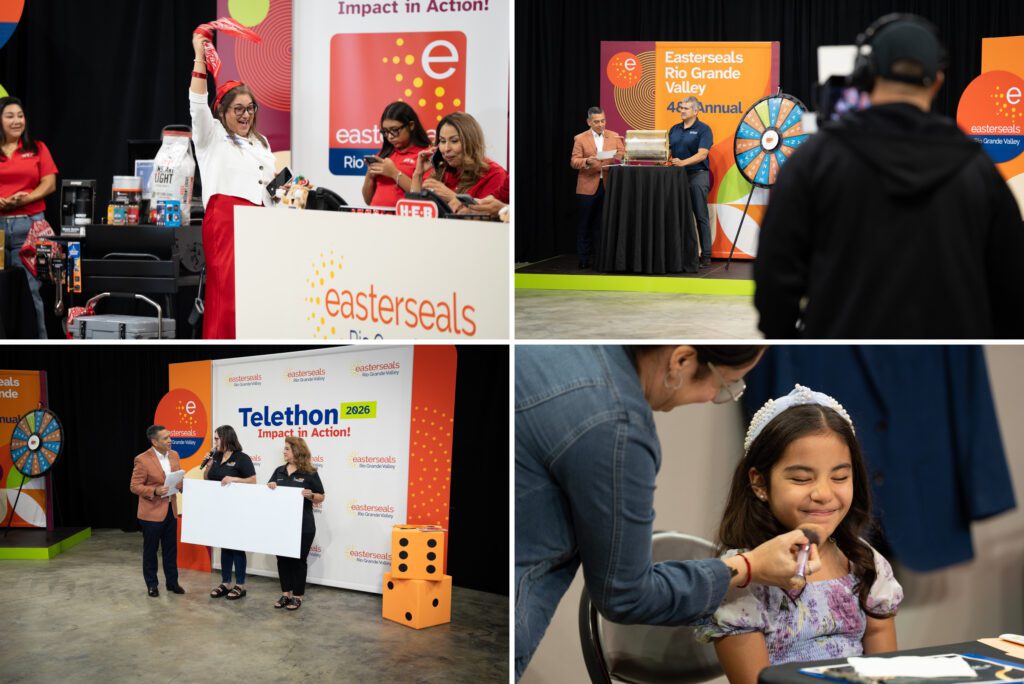
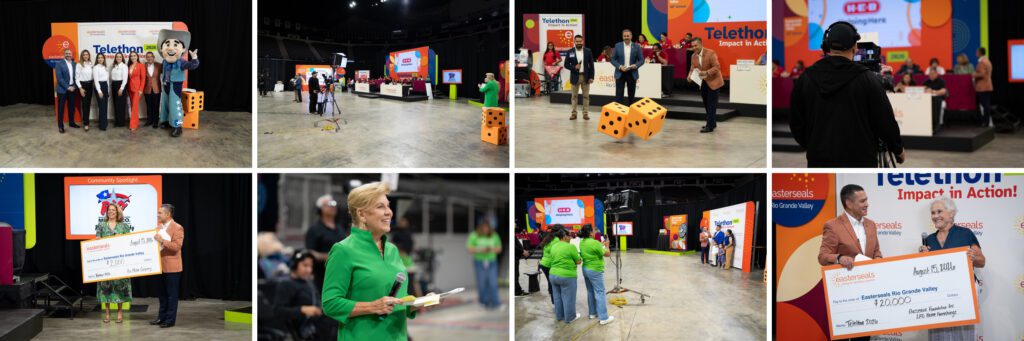
This is one of those assignments that reminds me why I still enjoy event photography after all these years. There is always something happening. You have people on stage, people working the phones, sponsors coming through, families being interviewed, television crews moving around, volunteers trying to keep everything running and about a hundred little moments happening in between all of that.

My job is basically to figure out where to point the camera.

Event Photography Is About More Than Photographing the Stage

I think sometimes people hear “event photography” and assume the photographer shows up, photographs whoever is speaking and gets a couple of wide shots of the room.

There is definitely some of that.  Buuuuuuuut that’s only part of the story.

At something like the Easterseals Telethon, I’m constantly moving around looking for the photographs that explain what the event actually felt like.

That means photographing the hosts and presentations, but also looking behind me to see what’s happening at the phone bank. It means getting the big check presentation and then noticing somebody laughing with the person sitting next to them.

Sometimes the best photograph isn’t happening anywhere near the stage.

That is really what I’m looking for.

The big moments tell you what happened. The smaller moments tell you what it felt like to be there.

Catching Up With People I’ve Known for Years

One of the things I enjoyed most about this year’s telethon really didn’t have anything to do with photography.

I’ve been doing this long enough now that I ran into photographer friends I’ve known for more than 30 years.

That’s a strange sentence to write.

I still remember when all of us were the younger news guys running around with cameras, and now we’re standing inside an arena talking about assignments we’ve done, people we’ve worked with and probably whatever piece of equipment we’re monkeying around with lately.

Some things never change.

I also ran into people from organizations I’ve worked with over the years, including Atlas and Hall, H-E-B and of course Driscoll Children’s Hospital.

That is one of the nice things about working throughout the Rio Grande Valley for this long. Eventually a big event starts feeling a little like a reunion.

Then the Cameras Went Live

Because this is a live telethon, everything has to keep moving.  Once the show starts, there really isn’t much room for stopping everything and saying, “Can we do that again?”  The hosts move from one segment to the next. Sponsors and board members come in with their teams. People rotate through the phone banks. Checks get presented. Families tell their stories.  Meanwhile the tv cameras, photographers and production people are moving around everybody trying not to become part of the story ourselves.

And somehow it works.

Honestly, it flowed pretty smoothly.

Each group that came in seemed to have its own strategy for raising money. One volunteer  told me her secret was calling all of her family from her own phone before somebody on live television could embarrass her by calling a friend sitting nearby.  That might be the most Rio Grande Valley fundraising strategy possible.

Everybody knows everybody down here.

Good Event Photography Has to Show the People Doing the Work

One thing I always try to photograph at events like this is the work happening behind the obvious stuff.

The people answering phones matter.  The volunteers matter.  The broadcast crew matters.  The sponsors standing around waiting for their segment matter.  Even the empty space, cameras, lights and equipment can help tell the story because they show the scale of what it takes to produce something like this.  Maybe that’s because I spent years working behind a video camera before my career became centered on photography.  Technology has changed tremendously since I started doing this (Social Media wasn’t a thing back in the 90s).

The storytelling part really hasn’t.  You’re still looking for a beginning, middle and end. You’re still watching people’s faces. You’re still trying to anticipate what happens next instead of reacting after it’s already over.  The camera is different.  The job really isn’t.

The Families Are Still the Heart of It

There were plenty of sponsors and recognizable faces at the telethon, but obviously the reason everybody was there was much bigger than that.  One of the things I’ve enjoyed about coming back is seeing some of the kids getting older and hearing how their stories have continued.  Then there are new families coming through who have been able to participate in Easterseals programs here in the Rio Grande Valley.  Those are the photographs I think become more important with time.  There were lots of smiles throughout the day, but there were tears too. Some of the teachers and educators came out to support the kids and cheer them on, and you could see that the relationships went far beyond whatever was happening during the broadcast.  You can’t manufacture that for a photograph.  You just have to recognize it when you see it.

And Then Somebody Brought Puppies

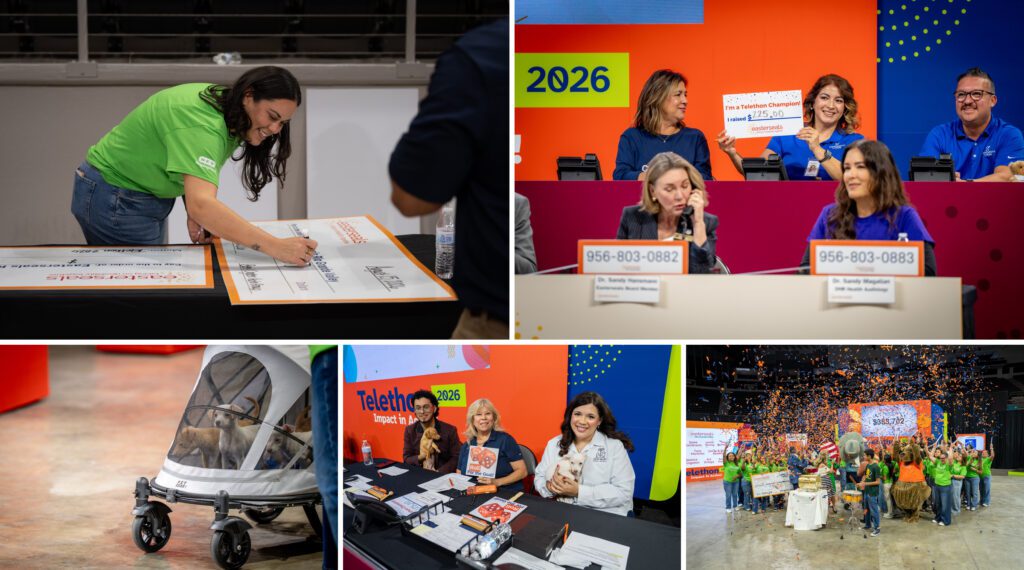
My personal favorite moment of the day — and I think I probably had plenty of company on this one — was when Palm Valley Animal Society showed up with puppies.

Not just puppies.

Puppies in a little stroller.

At that point I think everybody forgot about whatever else they were supposed to be doing for a minute.

Apparently the saying that everyone loves puppies still holds true in 2026.  (At least I’m going with it).

Those little moments are also exactly why I like photographing events. I can spend part of the day photographing a formal presentation, turn around and photograph a television camera operator working, photograph someone raising money on the phone and five minutes later I’m on the floor trying to get a photograph of puppies riding around in a stroller.

You never really know what you’re going to get.

Photographing the Whole Story

By the end of the telethon, Easterseals Rio Grande Valley had surpassed its fundraising goal.

Then came the celebration.  Confetti went everywhere, people cheered, everybody gathered together and for a few minutes you could see the payoff from all the work that had gone into the day – From a photography standpoint, that’s the photograph everybody expects.

But it works better when you have everything that came before it.

The phone calls.

The interviews.

The checks.

The television crews.

The volunteers.

The families.

The quiet moments.

The funny moments.

And yes, the puppies.

Put all of those photographs together and now you don’t just have photographs of an event.

You have the story of the event.

What I Look for When Photographing an Event

Every assignment is different, but there are a few things I’m almost always thinking about when I’m covering an event:

  • The establishing photograph. Where are we? What does this event look like?
  • The important people and moments. Speakers, presentations, sponsors, awards and anything the client specifically needs documented.
  • Real reactions. Laughter, concentration, excitement, emotion and interaction.
  • Details. Signage, branding, equipment, decorations and the little things that give the event its identity.
  • Behind the scenes. The people making everything happen are often part of the story too.
  • The unexpected stuff. That’s usually where some of my favorite photographs come from.

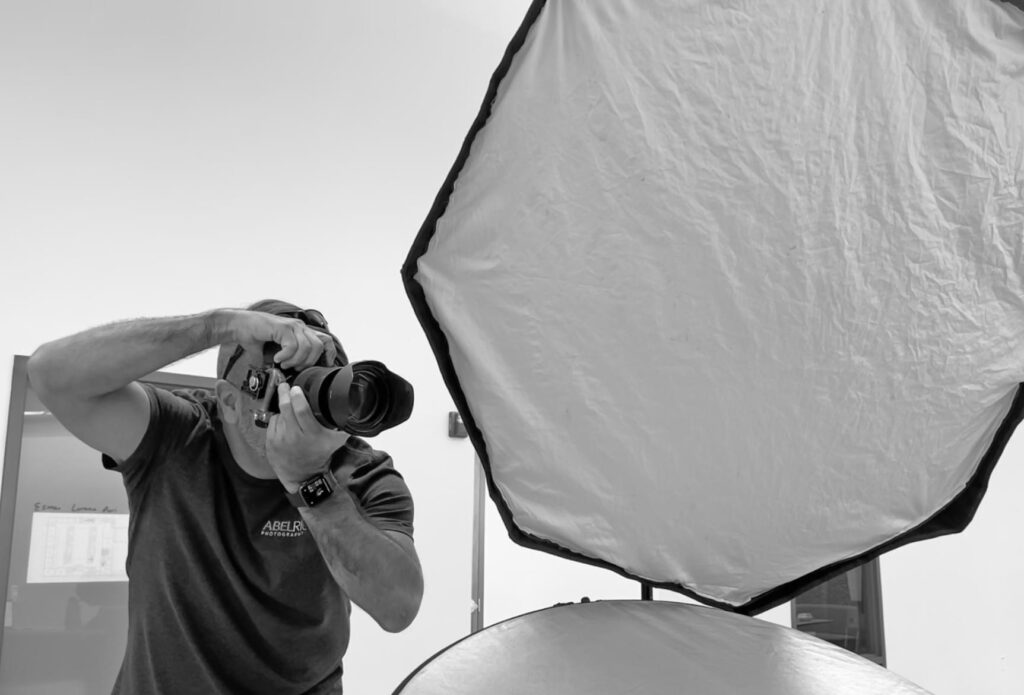
That approach comes from spending most of my career bouncing between editorial work, commercial assignments, portraits, video and events.

As a commercial photographer, I don’t really see those as completely separate things.

A portrait teaches you to watch faces.

Editorial photography teaches you to look for a story.

Commercial photography teaches you to understand what the client needs the photographs to communicate.

Event photography makes you do all of those things at once — except everything is moving and nobody is waiting for you.

Event Photography in the Rio Grande Valley

The 2026 Easterseals Telethon was another good reminder of why I enjoy photographing events throughout the Rio Grande Valley.

Yes, the client needs photographs.

But what I’m really trying to give them is a visual record they can use months or even years later to remember what happened, show the people who made it possible and tell the story to someone who wasn’t there.

That’s what I think good event photography should do.

And if somebody rolls through the next event with another stroller full of puppies, I’m definitely photographing that too.

Commercial Photography at a Congressional Record Ceremony in Pharr, Texas

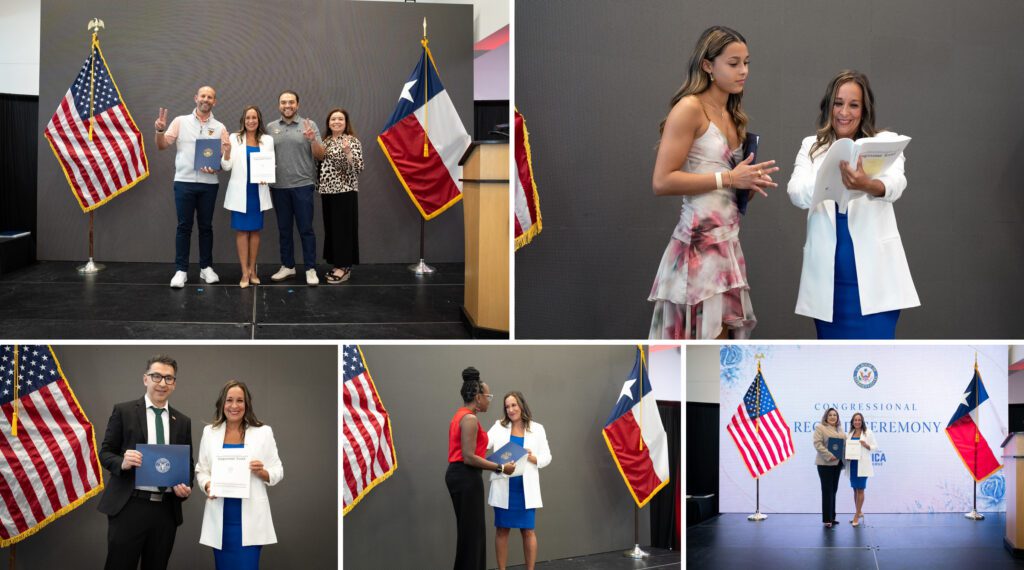
On August 13, 2026, I was invited to help photograph Congresswoman Monica De La Cruz‘s Congressional Record Ceremony in Pharr, Texas.

I’ve covered plenty of government and community events over the years, but this one was a little different.  The people being recognized weren’t simply receiving another award or plaque. Their accomplishments, service and stories had been entered into the Congressional Record.  That’s a pretty big accomplishment when you stop and think about it.

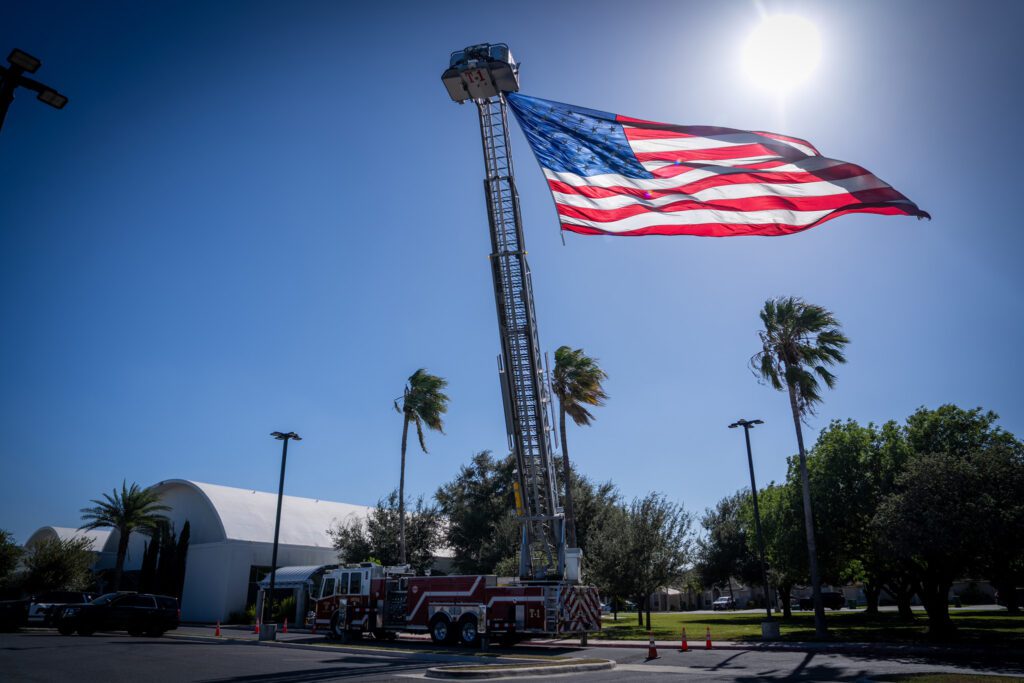
I actually made that photograph before I ever walked inside.

The Pharr Fire Department had this enormous American flag hanging from its ladder truck. The wind was moving it around, the palm trees were moving with it, and the South Texas sun was doing what the South Texas sun does.

Before photographing any event, I always try to find something that establishes where I am and gives the viewer a sense of the day.

That was it.

What Is a Congressional Record Ceremony?

I knew what the Congressional Record was in a general sense, but I had never really stopped to think about what it means when somebody from here in the Rio Grande Valley actually becomes part of it.

The Congressional Record is the official published record of the proceedings of the United States Congress. Members of Congress can also submit remarks recognizing people, organizations and accomplishments from their districts.

Congresswoman De La Cruz’s ceremony recognized South Texans whose accomplishments and service had been entered into that permanent record.

So I wouldn’t really call these traditional awards.

These were people’s stories being formally recognized and preserved.

That made the event a little more interesting to photograph.

The Story Starts Before the Program Does

One thing I’ve learned doing commercial photography is that an event doesn’t begin when somebody walks up to the microphone.

It starts when people walk through the door.

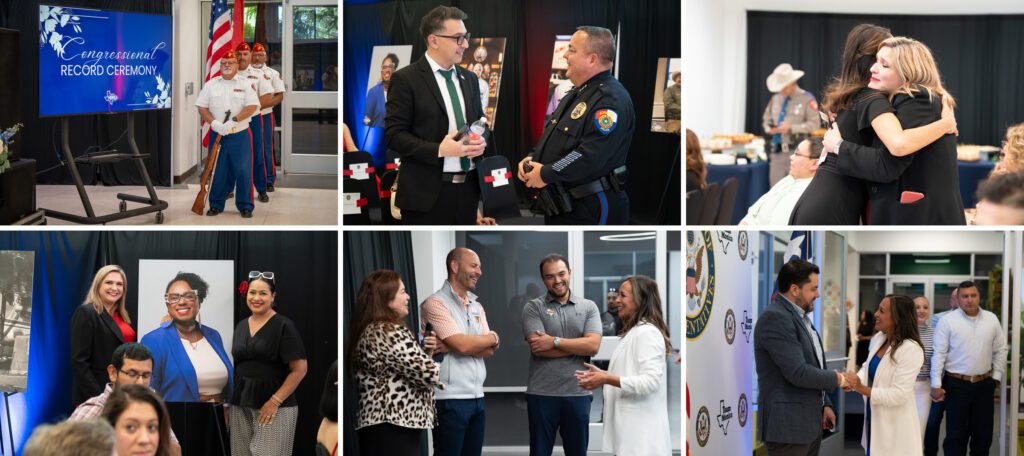
People were greeting each other, catching up, shaking hands and introducing family members. Law-enforcement officers were talking with guests. Honorees were arriving. There were hugs and plenty of conversations happening around the room.

Those are the photos I always hunt for.  The formal photographs tell you what happened.  The candid ones usually tell you what it felt like.

And because this is the Rio Grande Valley, there were plenty of familiar faces.

I also remembered Monica from years ago when we both crossed paths through NHPO here in the Valley. I served with the organization for several years myself.

I couldn’t tell you the exact year anymore, and NHPO wasn’t exactly famous for keeping perfect records, but I remember the people.

South Texas really can be a small place.

Everything Became Formal

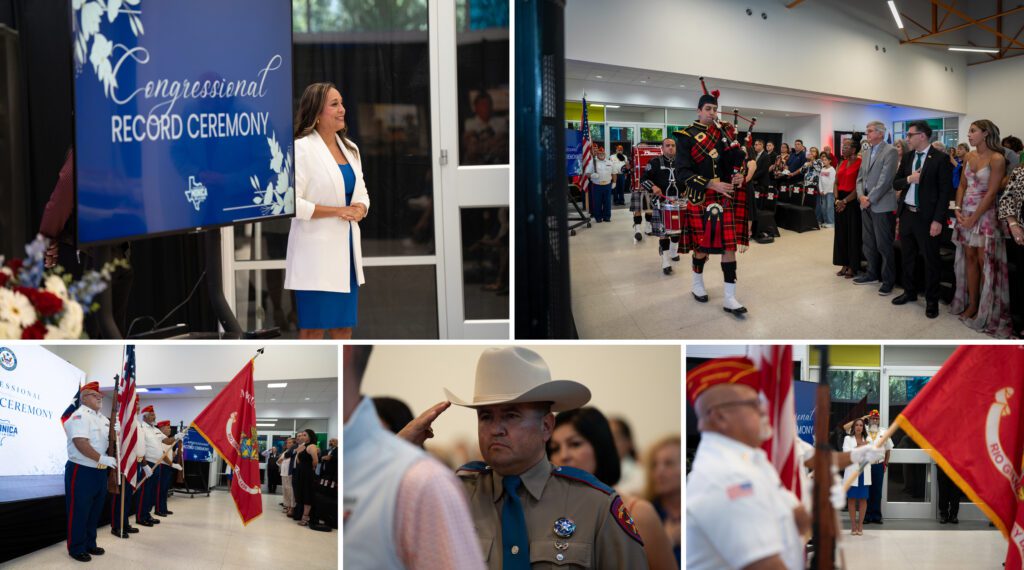
Once the ceremony started, the atmosphere changed quickly.

There was a color guard.

Bagpipes.

Flags.

Uniformed officers and veterans.

Everybody stood.

This is where covering an event gets interesting from a photography standpoint.

There’s an obvious photograph directly in front of you, but there may be three other pictures happening at exactly the same time.

Someone is coming down the aisle.

Someone else is saluting.

The flag is moving into position.

The audience is reacting.

You have to keep looking around.

You don’t get to stop everybody and ask them to do it again because you were pointed in the wrong direction.

Some Photographs Simply Cannot Be Missed

There is also a practical side to government event photography.

The client needs certain photographs.

Period.

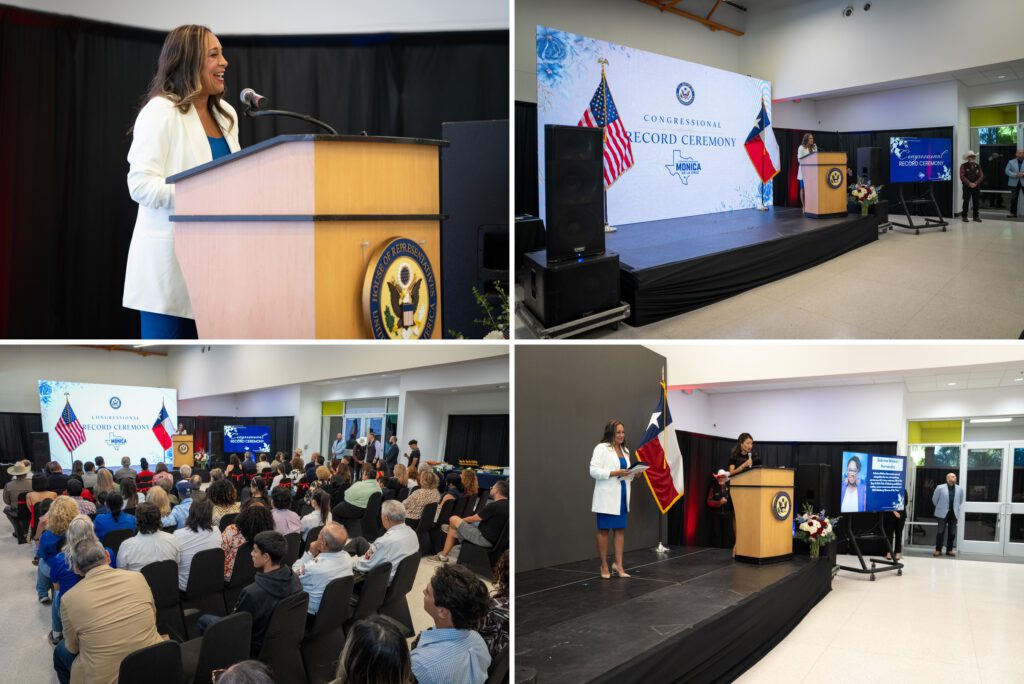
The speaker at the podium.

The room.

The presentations.

The honorees.

The Congressional Record.

The handshakes.

The group photographs.

Those pictures have to be there when the gallery is delivered.

That doesn’t mean I stop looking for better photos. It just means I make sure the assignment is covered before I start worrying about being clever.

The photographer’s favorite image and the client’s most useful image aren’t always the same photograph.

A professional photographer needs to come back with both.

Every Recognition Had a Different Story

Once the presentations began, I started understanding why the event mattered.

There wasn’t one type of person being recognized.

There were educators, law-enforcement officers, veterans, businesses, athletes and people who had spent years serving the community.

Some recognitions were celebratory.

Others were much more emotional.

That’s something a program or schedule can’t really tell you.

One minute people are laughing.

A few minutes later the room gets quiet.

Somebody starts talking about a person’s life, service or something they went through, and suddenly the mood changes completely.

As the photographer, I’m watching all of it.

Sometimes the photograph isn’t the person speaking.

Sometimes it’s the person listening.

Covering an Elected Official Without Turning It Into Politics

Since this assignment involved a member of Congress, I think this is worth saying.

I’ve photographed elected officials and government organizations for years (The first major one was Bill Clinton coming to Mission back in the late 90s).

For me, photographing an event isn’t about choosing a political side.

Politics and the constant arguing around it were actually part of the reason I backed away from social media. I got tired of everything turning into a fight.

Photography is different for me.

I’m there to document the people, the work and what happened. I’m not there to tell anybody who they should vote for.

This wasn’t a campaign rally.

It was a Congressional Record Ceremony recognizing people from South Texas.

That’s the story I was there to photograph.

And really, I enjoy the work a lot more when I approach it that way.

I Keep Shooting After the Official Picture

Some of my favorite photographs from assignments like this happen after everybody thinks the photograph is finished.

The official presentation happens.

Everybody looks at the camera.

I make the picture.

Then they relax.

Somebody starts looking through the Congressional Record they were just handed.

They laugh.

They say something to the person next to them.

They hug.

That’s when I keep shooting.

Those little moments are what make a gallery feel complete instead of looking like 150 versions of the same handshake.

They’re also usually the photographs people remember.

What I Look for When Photographing a Government Event

When I’m covering a government, corporate or community event, I’m trying to create a complete visual record of what happened.

That usually means looking for:

  • A strong establishing photograph
  • Speakers and officials
  • Important presentations
  • Wide photographs showing the room
  • Honorees and their families
  • Audience reactions
  • Signage and details
  • Formal photographs the client knows they’ll need
  • Candid moments nobody could have planned
  • Horizontal and vertical photographs that can actually be used later

That last part matters.

A communications department may need one photograph for a press release and another for Instagram. A newspaper may need something horizontal. A family member may just want the photograph where everybody is smiling.

Commercial photography has to be good photography, but it also has to be useful photography.

Photographing Something Worth Remembering

By the end of the ceremony, I understood the assignment differently than I had when I walked through the door.

I wasn’t really photographing politics.

I was photographing people from the Rio Grande Valley whose accomplishments, service or lives had been considered important enough to become part of the Congressional Record.

Photography does something similar on a much smaller scale.

It preserves what the room looked like.

Who was there.

Who laughed.

Who hugged.

Who saluted.

Who stood at the microphone.

And what someone’s face looked like when they were handed something recognizing what they had done.

That’s one of the reasons I still enjoy commercial photography after all these years.

The assignments change.

The people change.

The equipment definitely changes.

The storytelling part really doesn’t.

You show up.

You pay attention.

And when something worth remembering happens, you make the photograph.

Why I Pulled Back From Social Media—but Never Really Left

I don’t think there was one specific day when I decided I was done with social media.

It happened slowly.

For years, I enjoyed it. I could check in on friends, congratulate somebody on a win, laugh at a silly joke or see what other people were creating. It was a simple way to stay connected, especially with people who had moved away from the Valley.

Then slowly my feed started changing.

Instead of seeing the people I had chosen to follow, I was constantly being shown political arguments, angry opinions and strangers fighting over everything imaginable. It didn’t matter whether it came from the left or the right. Everybody seemed convinced that the other side was destroying the country, and the platforms appeared happy to keep placing them in front of each other.

That is only my opinion. I don’t know what happens behind the scenes or what the people running these companies have in mind (I just work here kind of thing).

I just know how it started making me feel.

I would open an app hoping to see what my Facebook friends were doing and leave irritated about an argument I was never part of. Sometimes I wouldn’t even remember why I had picked up my phone in the first place.

Life is already complicated enough. I have a business to run, children to raise, bills to pay, relationships to maintain and a life that keeps moving whether I am ready or not. I finally realized that I didn’t need to voluntarily add another obstacle to my day.

So I started pulling back.

I still use social media (Facebook, LinkedIn, and Instagram), but not the way I once did. It is no longer the first thing I need to see when I wake up. I don’t automatically reach for it every time I am bored or standing in a checkout line. I don’t feel obligated to know what strangers are angry about that particular day.

I will probably never leave social media completely, though.

Part of that is because I genuinely enjoy staying connected with friends who left the 956 and the meme of the day. These are people I may not see regularly, but I still want to know how they are doing. I want to see their children grow up, celebrate their accomplishments and occasionally remind them that somebody back home is still cheering for them.

Social media has also become a record of my own journey through life.

It has documented some of the biggest moments I have experienced.

Becoming a dad.

Opening my first photography studio.

Closing that studio and rebuilding the business as a completely mobile photographer.

Walking into places I never imagined I would be trusted to photograph.

Open-heart surgery.

Weddings.

Pediatric brain surgery.

Assignments involving the federal government.

There are photographs, posts and memories from different seasons of my life that I probably would have forgotten had I not shared them. In that sense, social media has become a strange kind of public diary. Not every page is important, and some of it probably makes me cringe now, but together it shows where I have been and how much my life has changed.

It also reminds me that a career is rarely a straight line.

There have been good years and difficult ones. There have been moments when I felt certain about where I was going and others when I had no idea what would happen next. There were things I once viewed as failures that eventually pushed me into work I never thought I would be doing.

I have never been motivated much by prizes or awards. I don’t collect them, and I have never wanted my career to become a shelf full of trophies. I am grateful for every opportunity I have received, but I give God the glory for opening doors I could not have opened on my own.

My goal has always been simpler than that.

Do good work.

Treat people well.

Keep learning.

Be thankful when somebody trusts me with an important moment.

And whenever possible, focus on something positive.

That does not mean pretending everything is perfect. It means refusing to spend all day feeding anger, fear and division when there is already enough of that in the world.

I would rather use these platforms to share a good photograph, celebrate someone’s success, tell part of my story or let people know that I am still here.

I am still here if somebody needs advice.

I am still here if an old friend wants to grab a cup of coffee.

And I am definitely still here if you need a new headshot because you are not happy with whatever artificial intelligence cooked up for you.

Social media is not completely good or completely bad. It is a tool, and like most tools, it depends on how we use it.

I simply decided that it no longer gets unlimited access to my time, attention or peace.

I didn’t leave social media.

I just put it back in its proper place.

Chasing the Wind Before the Fourth of July

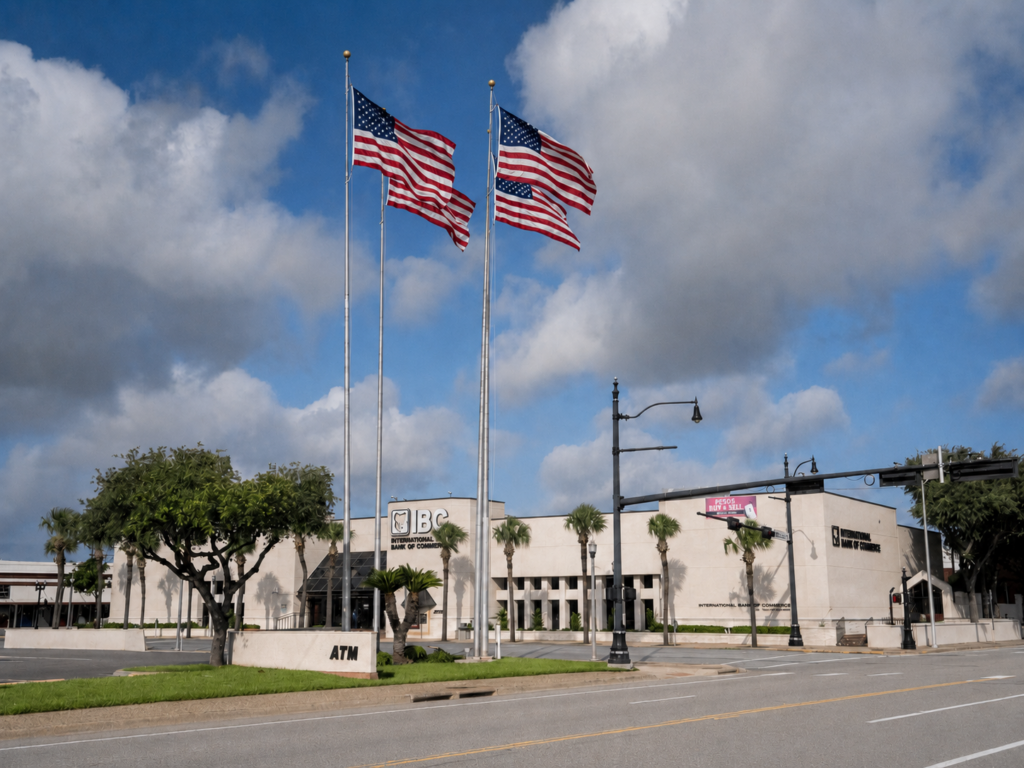
A few days before the Fourth of July, I got a call about a last-minute assignment for IBC Bank.

They needed photographs of American flags flying at several of their locations across the Rio Grande Valley—McAllen, Hidalgo, Weslaco, and Edinburg. The catch was that it was already Friday night, and everything had to be photographed, edited, and delivered by Monday morning (I don’t work on Sundays anymore).

Honestly, that kind of deadline gets my attention.

It reminded me of my old news days, when you were given an assignment, figured out the logistics, and got it done. There wasn’t much time to overthink anything.

So, of course, I said yes.

The client had already been trying to get the photographs, but they kept running into one major problem: there wasn’t enough wind. Photographing a flag sounds simple until the flag is hanging straight down against the pole. Without movement, there isn’t much of a picture.

I checked the forecast, and it looked like we were supposed to have several windy mornings leading up to the Fourth. Perfect.

I started planning everything out. I wanted to get up before sunrise and possibly photograph at least one of the locations with the morning sun coming up behind the flag. In my head, it looked very majestic.

Then I woke up (Reality hit).

No wind. Nothing.

The flags were completely still.

I prayed, waited, and kept checking the weather app, hoping the forecast would finally kick in and give me what I needed. Eventually, I decided to roll out and start in downtown McAllen.

By the time I arrived at the  IBC location, the wind had picked up enough for me to work. Since the bank was closed, I didn’t have to deal with much traffic or people coming in and out. That gave me room to move around, try a few different angles, and get some pretty nice photographs without being in anyone’s way.

From McAllen, I headed south to Hidalgo.

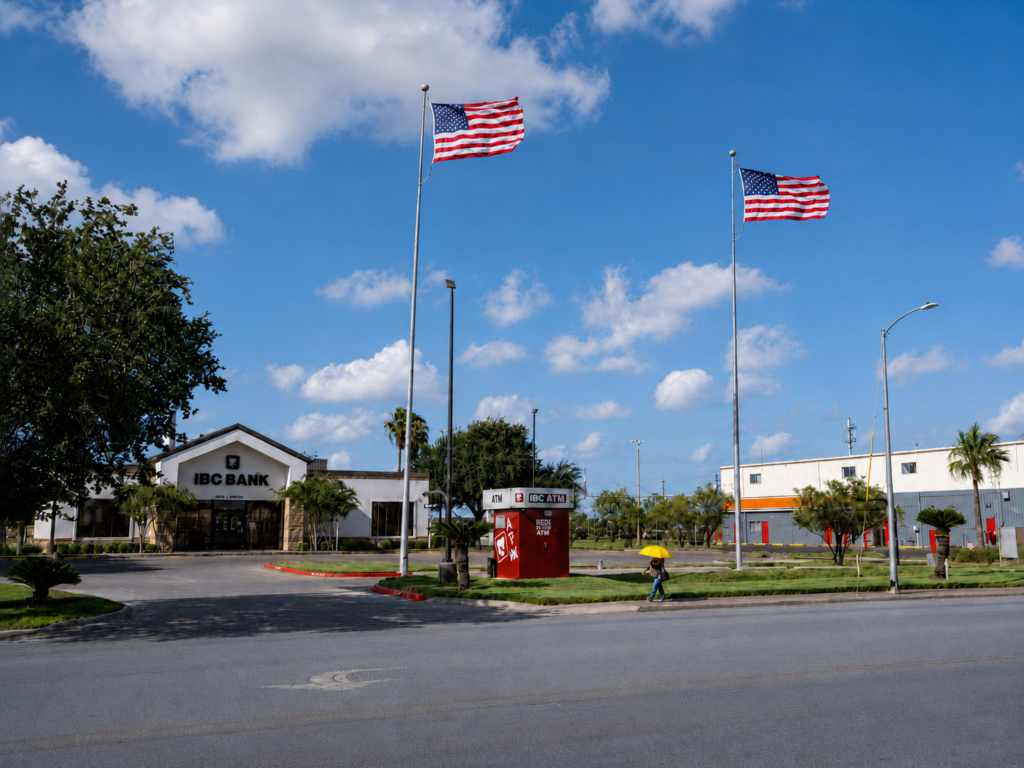
That location had a steady flow of foot traffic because of its proximity to the Hidalgo International Bridge. People were walking toward the bridge, while others were making their way back home.

I wasn’t completely sure what I could or couldn’t show in the final photographs, so I spent some time waiting for clean gaps between people. It ended up being easier than I expected.

One of my favorite frames from the entire assignment was a woman walking with an umbrella between two flags. It was one of those moments that came together naturally. I couldn’t have planned it, but I was ready when it happened.

Once I had what I needed, I took Military Highway toward Weslaco.

I hadn’t driven that stretch in years, so it was interesting to see how much development had started moving into the area. There is still plenty of farmland out there, but you can see the changes slowly taking hold.

As I drove, I kept thinking that one day much of that farmland might be gone, just like what has happened in north Edinburg. Progress keeps moving, but sometimes you don’t notice how much a place has changed until you haven’t seen it for a while.

The Weslaco location was downtown and fairly straightforward. Again, it was mostly a matter of waiting for openings between people and vehicles. Once I had enough variety and knew the photographs would work, I packed up and headed to the final stop in Edinburg.

The Edinburg IBC now sits where the old Luby’s used to be near University Drive.

Wrapping up there brought back another set of memories. That whole area has changed so much over the years. Businesses open, businesses close, and familiar buildings disappear. Through all of it, Pan Am—now UTRGV—has remained and continued to grow.

That part felt especially personal.

I started college there in 1994, and now my oldest son is enrolled and will begin classes there in the fall. I hadn’t expected a bank photography assignment to make me stop and think about how quickly time moves, but that’s what happened.

By the end of the assignment, I was tired, but I was happy with what I had captured.

We met the deadline, stayed within the budget, and the client was pleased with the final photographs. I even received a nice text saying they were impressed with how everything turned out.

That always feels good, especially when an assignment comes together under a tight turnaround.

More than anything, I was thankful for the opportunity. It was a fun challenge, it took me through several parts of the Valley, and it gave me a small reminder of why I still enjoy this kind of work.

Sometimes you make detailed plans for the perfect sunrise.

Other times, you pray for wind, watch the flags, and get to work.

From Kindergarten to Graduation: Why Photos Matter

Some photographs hit you harder than others.

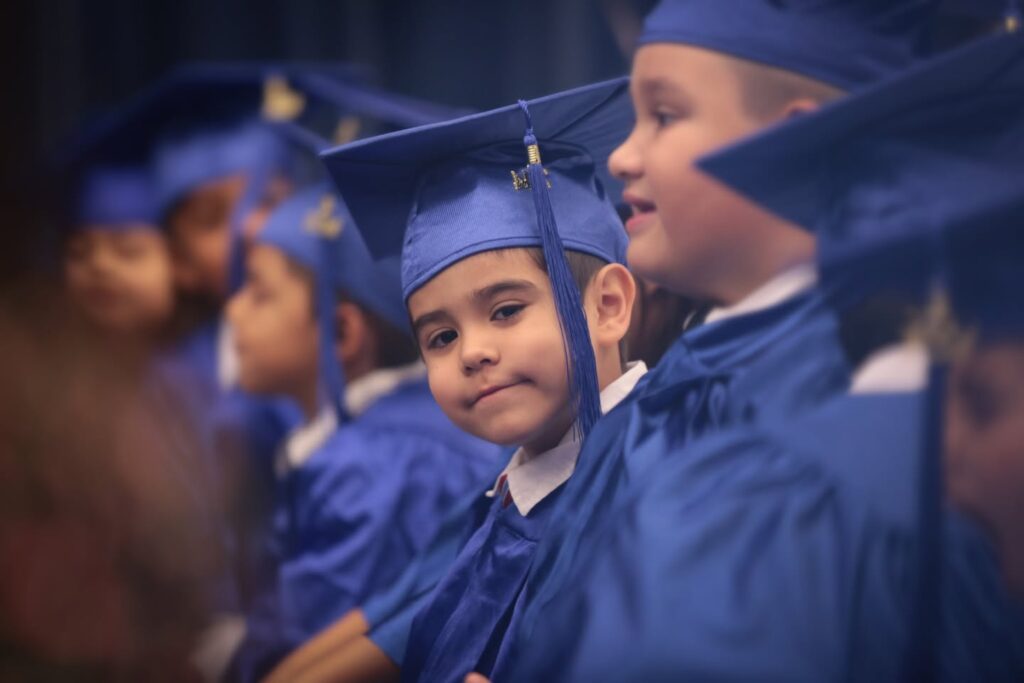
   Kindergarten graduation portrait with blue cap and gown Bryan Elementary Mission Texas

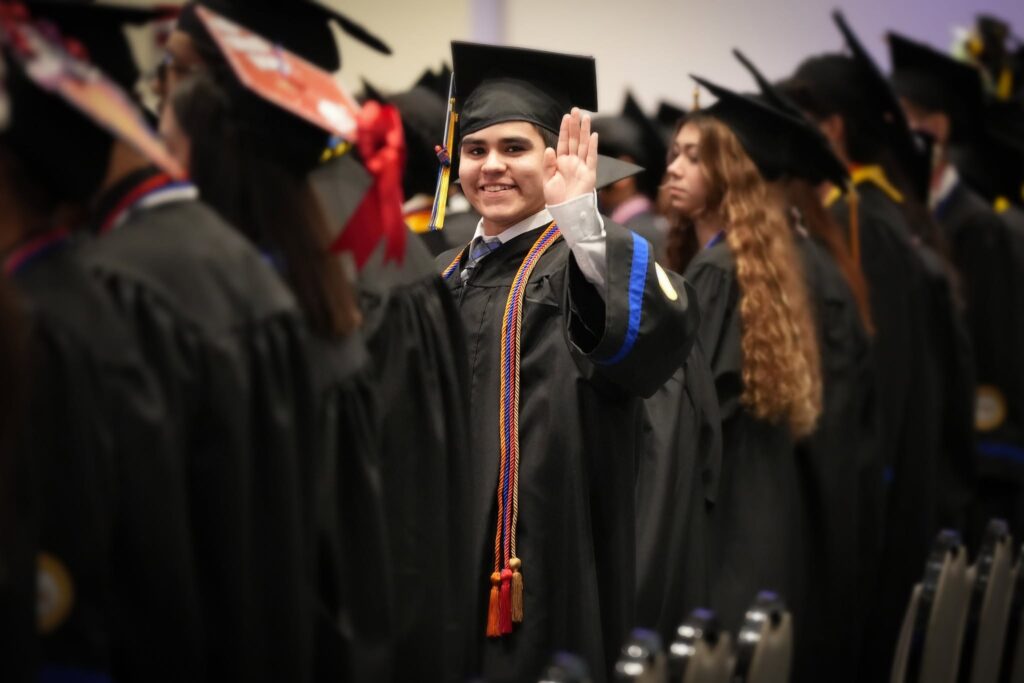
This week, I looked at a photo of my son as a little boy in his blue kindergarten cap. Then I looked at him standing there in his graduation gown, getting ready to walk across the stage.

Idea North Mission High school graduate waving during graduation ceremony

And honestly, I don’t know how we got here so fast.

When people talk about photography, they usually talk about lighting, cameras, posing, locations, and all the technical things. And yes, all of that matters. But the older I get, the more I realize the real value of a photograph is not always obvious in the moment.

Sometimes a photo is just a quick picture.

Until years later, when it becomes proof.

Proof that they were that small.
Proof that you were there.
Proof that life was moving, even when you were too busy to notice how fast it was going.

As a photographer, I’ve spent years documenting families, seniors, events, businesses, and important moments for other people. I’ve always believed photos matter. But as a dad, moments like this remind me why they matter so much.

Photos are part of your family’s legacy.

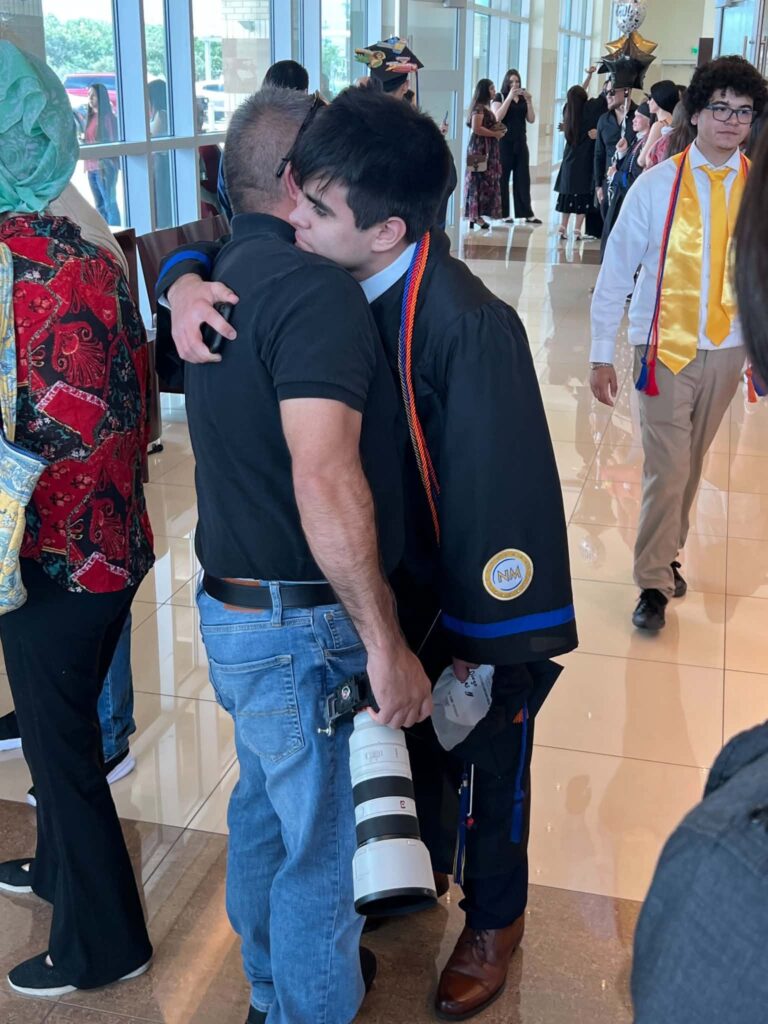
They hold the little details we think we’ll never forget. The way your child looked in a tiny cap and gown. The way they smiled when they saw you in the crowd. The way they hugged you when the ceremony was over. The way your heart felt full and broken at the same time because you were proud, but also wondering where all the years went.

I’m so proud of my son. Not just for graduating, but for the young man he is becoming.

He has come such a long way. Through all the growing, changing, learning, and figuring things out, he has kept such a good heart. He is kind, thoughtful, funny, and has the kind of soul that makes people better just by being around him.

As his dad, watching him grow has been one of the greatest blessings of my life.

And as a photographer, I’m thankful we have the photos.

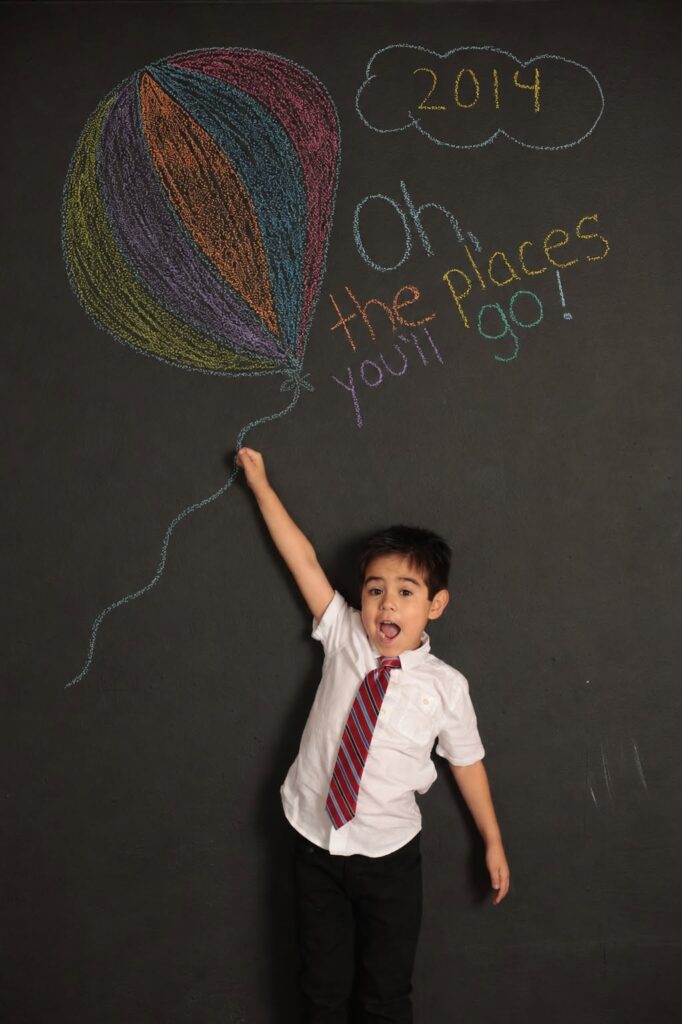
Child standing in front of chalkboard graduation photo

The kindergarten photo. The senior portraits. The graduation moments. The quick snapshots in between. They all matter. Maybe not equally in the moment, but together they tell a story that can never be replaced.

That’s why I always tell people not to wait.

Don’t wait until life is less busy. Don’t wait until everyone looks perfect. Don’t wait until the house is clean, the schedule slows down, or the timing feels right.

Take the photo.

Book the session.

Print the picture.

Save the memory.

Because one day that little boy in the blue cap becomes the young man walking across the stage. And when that day comes, you’ll be grateful you have something to hold onto.

I love you, son. I’m proud of you. Always.

And I’ll always be cheering you on.

Father hugging son after Idea North Mission high school graduation

Foster Angels Rising Stars Luncheon 2026

Photographing the 2026 Foster Angels Luncheon in the Rio Grande Valley

Young people featured through Foster Angels of South Texas during the 2026 Rising Stars Luncheon

(Young people featured through Foster Angels of South Texas during the 2026 Rising Stars Luncheon)

Last week, I had the opportunity to help Foster Angels of South Texas again with their 2026 Rising Stars Luncheon in the Rio Grande Valley.

I was there to help with the group photos and event coverage, but the longer I was in the room, the more I kept thinking about something simple.

A little bit of compassion can go a long way.

That sounds obvious, but it hits differently when you’re standing in a room full of people who have chosen to care. People who give their time, their money, their attention, their energy, and in some cases their homes to children and young people who need support.

At an event like this, there are the things you expect to photograph. The speaker at the podium. The full room. The sponsors. The honorees. The handshakes. The smiles. The group photos.

But underneath all of that, there was something bigger happening.

It was a room full of people showing up for kids who need to know they are not alone.

Thinking Back to When I Was a Kid

This luncheon made me think back to when I was younger.

Both of my parents were social workers, and I remember visiting them at their offices when I was a kid. I would see posters and signs about helping foster children. I don’t remember every detail, but one poster stayed with me.

It said something about adopting the older one.

As a kid with both parents at home, that hit me in a different way.

I remember thinking about how good I had it.

At that age, you don’t fully understand the system. You don’t understand all the stories behind those posters. You don’t understand what some kids have already had to carry.

But you understand enough to know that not every child is growing up with the same safety, support, or stability.

And for some reason, that stayed with me.

Seeing It Differently Now

Now, in 2026, I see it differently.

I see it as a dad. I see it as someone involved with my church. I see it as someone who has spent years photographing people, families, nonprofits, businesses, and community events across the Rio Grande Valley.

The older I get, the more I understand how much one good adult can matter in a young person’s life.

A good mentor can help guide someone onto a better path.

A kind word can land at the right time.

A person who keeps showing up can help a young man or young woman believe that their story is not already finished.

None of us gets to choose every card we are dealt. But the right support can make a difference in how someone plays the hand they were given.

That was what I kept thinking about during the luncheon.

The People Who Work Quietly

Guests gathered for the 2026 Foster Angels Rising Stars Luncheon in the Rio Grande Valley.Alt text: Foster Angels Rising Stars Luncheon 2026 event photography in the Rio Grande Valley

(Foster Angels Rising Stars Luncheon 2026 event photography in the Rio Grande Valley)

I’ve always enjoyed helping nonprofits because you get to meet people who are giving of themselves without expecting much in return.

A lot of those people go under the radar.

They are not doing it for applause. They are not doing it for attention. They are not doing it because someone is going to put their name on a banner.

They are doing it because the work matters.

That is one of the things I respect most about events like this. Yes, there are speakers, honorees, sponsors, and a full room of people. But behind the event are countless quiet acts of service.

Someone made the call.

Someone gave the donation.

Someone mentored the young person.

Someone opened a door.

Someone stayed when it would have been easier to walk away.

That kind of work does not always photograph easily, but you can feel it in the room.

The Photos That Stayed With Me

There were a few images from the luncheon that stayed with me.

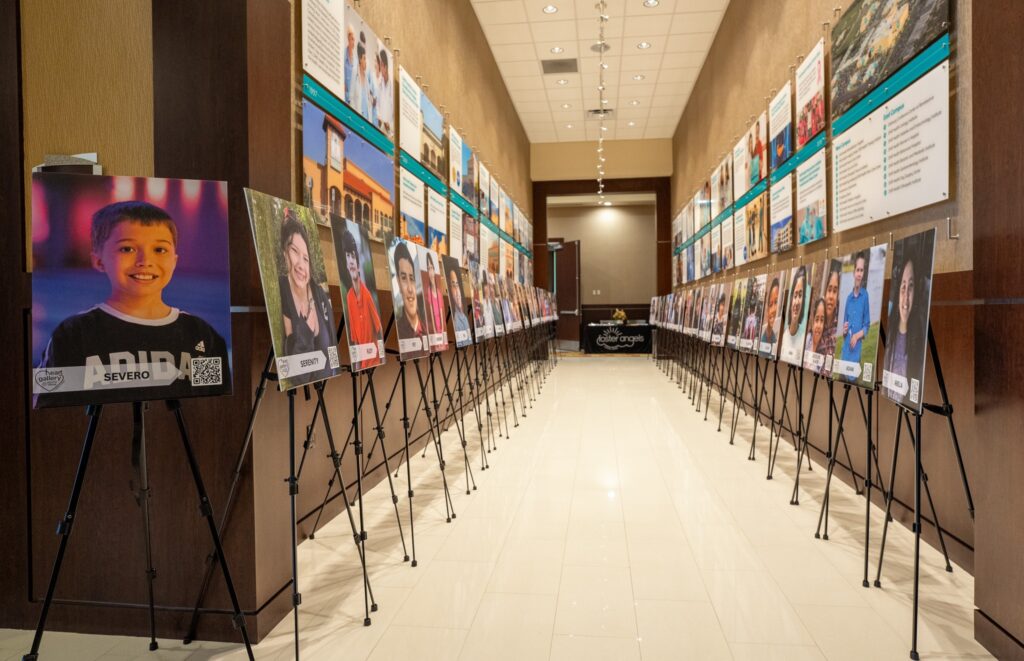
The hallway lined with portraits was one of them. Before you even walked into the room, you saw face after face. Young people with names, stories, and futures ahead of them. That hallway said a lot before anyone stepped on stage.

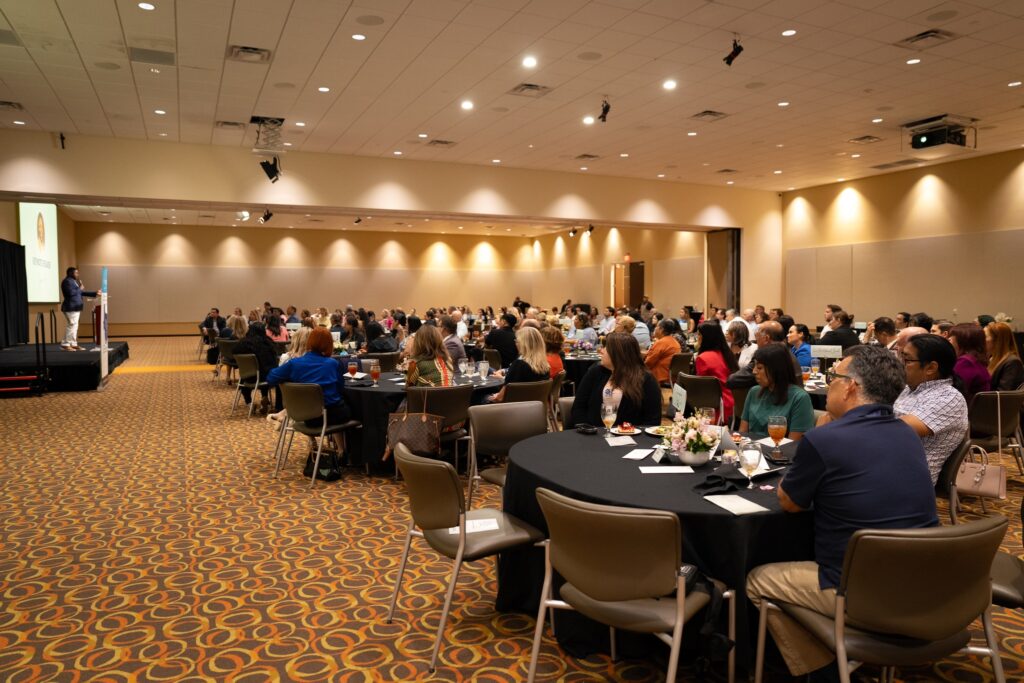
Then there was the wide photo of the room. Tables filled. People listening. People supporting. People being present.

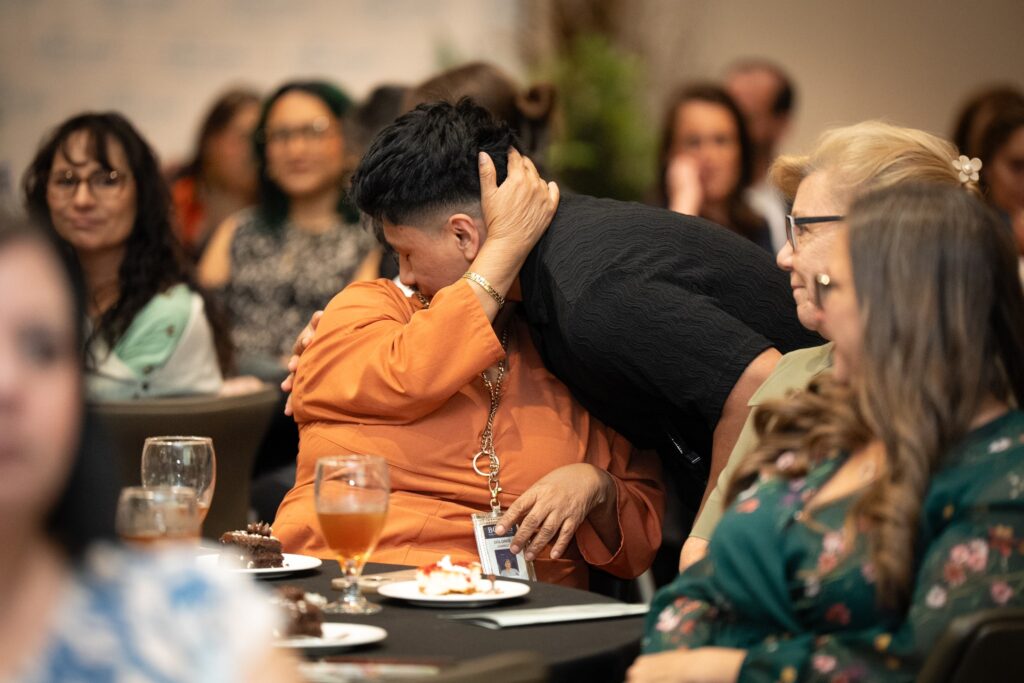
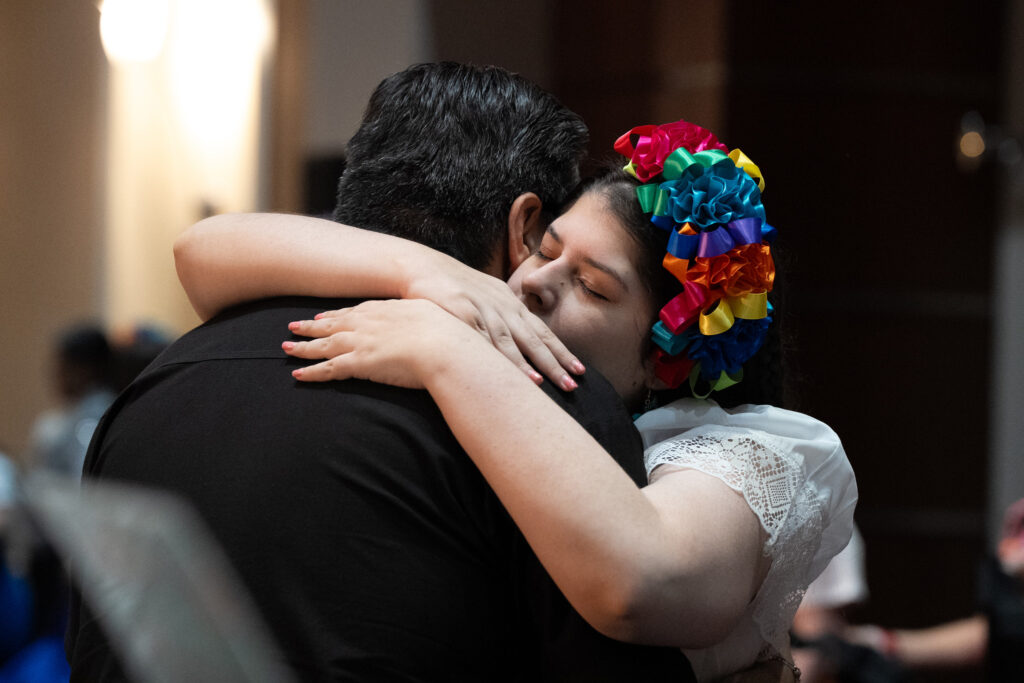
There was also a quiet moment during the program when one of the young people leaned in for a hug with someone close to them. I don’t know the full story behind that moment, and I don’t need to.

The photo says enough.

It was tenderness.

It was support.

It was what the event was really about.

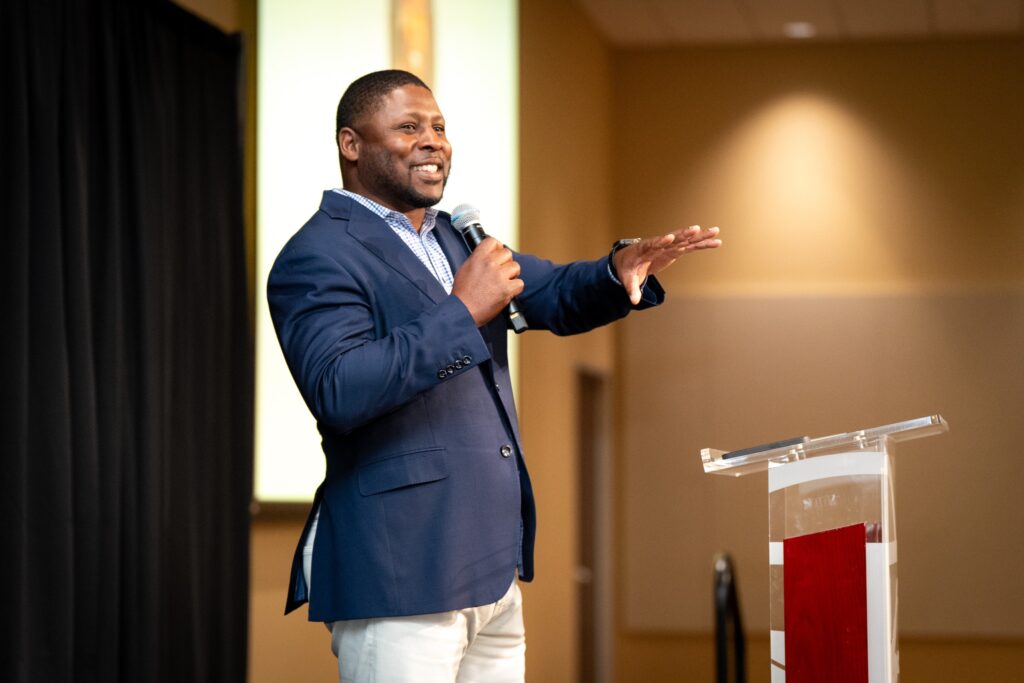
Keynote speaker Quan Cosby addresses guests during the 2026 Rising Stars Luncheon

(Keynote speaker Quan Cosby addresses guests during the 2026 Rising Stars Luncheon)

And then there was keynote speaker Quan Cosby, who spoke with energy and heart about advocating for children and youth experiencing foster care.

Those are the kinds of images I look for at events. Not just the obvious ones. Not just the podium shot or the room shot. I’m always looking for the smaller moments that tell you what the day actually felt like.

Why These Events Matter

Emotional moment during Foster Angels Rising Stars Luncheon in South Texas

(A quiet moment of support during the Foster Angels Rising Stars Luncheon)

Event photography can be easy to misunderstand.

People sometimes think it is just about documenting who was there. And yes, that matters. Organizations need clean photos of the room, the speakers, the sponsors, the honorees, and the people who helped make the event possible.

But the better purpose is storytelling.

For a nonprofit, photographs help people understand the mission. They help supporters remember why they gave. They help future donors see the people behind the work. They help an organization say, “This is what your support makes possible.”

That matters.

Especially when the work touches real lives.

The Foster Angels Rising Stars Luncheon was one of those events that reminded me why I still enjoy doing this kind of work.

Compassion is not always loud.

Sometimes it looks like a full room.

Sometimes it looks like a hallway of portraits.

Sometimes it looks like a hug.

And sometimes it looks like people choosing to show up, again and again, for kids who deserve to know that someone is in their corner.

I was grateful to be there.

And I was grateful to help tell a small part of that story.

2026 A Night at the Races for C.A.M.P. University

Photographing One of the Most Fun Galas in the Rio Grande Valley

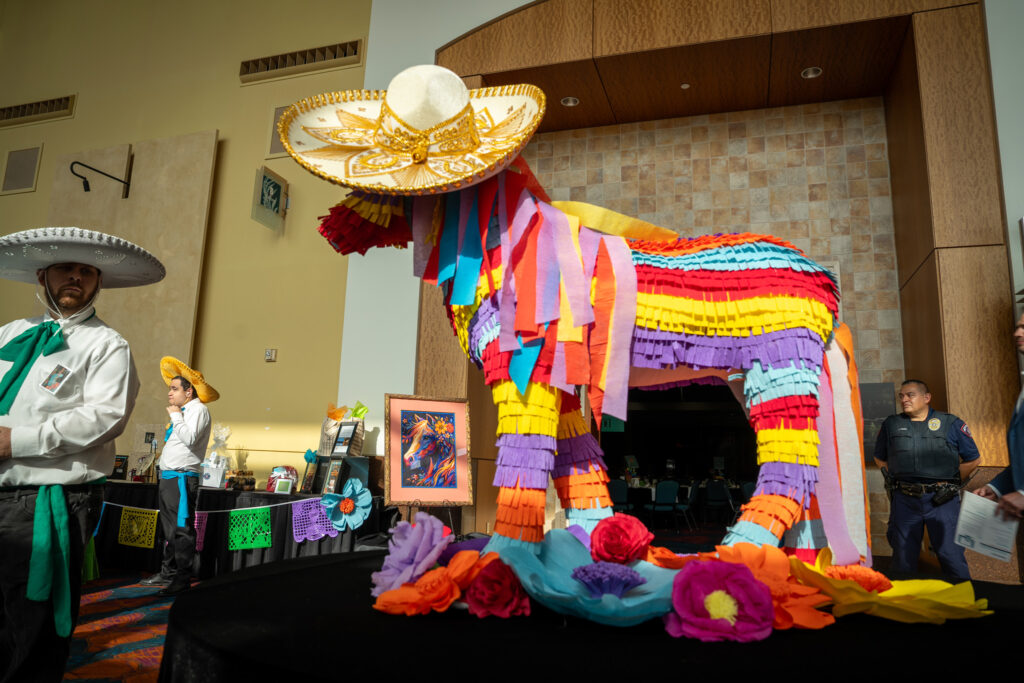
Colorful Cinco de Mayo details helped set the tone for this year’s Night at the Races gala.

(Colorful Cinco de Mayo details helped set the tone for this year’s Night at the Races gala.)

This year, I had the opportunity to help photograph C.A.M.P. University’s gala again.

The theme was A Night at the Races, and since this year’s event fell on Cinco de Mayo, the room had even more color, music, hats, laughter, and energy than usual.

If you’ve never been to one of these galas, it really is a lot of fun.

People show up dressed like they’re headed to the Kentucky Derby. There are hats, bright colors, nice suits, bow ties, dresses, laughter, and a room full of people who are clearly there to enjoy themselves.

Then there are the races.

They have sponsored race horses shown on video, and when the race starts, the room gets loud fast. People cheer for their horse. Tables start yelling. Someone’s organization wins. Everyone gets into it.

This year had that same race-night energy, but with a Cinco de Mayo feel woven into the room. The decorations were colorful. The outfits were fun. The whole night had a little extra life to it.

But the more years I photograph events like this, the more I’m reminded that the fun is only part of the story.

Underneath the theme, the decorations, the outfits, and the cheering is a group of people showing up for something that matters.

How I First Connected With C.A.M.P. University

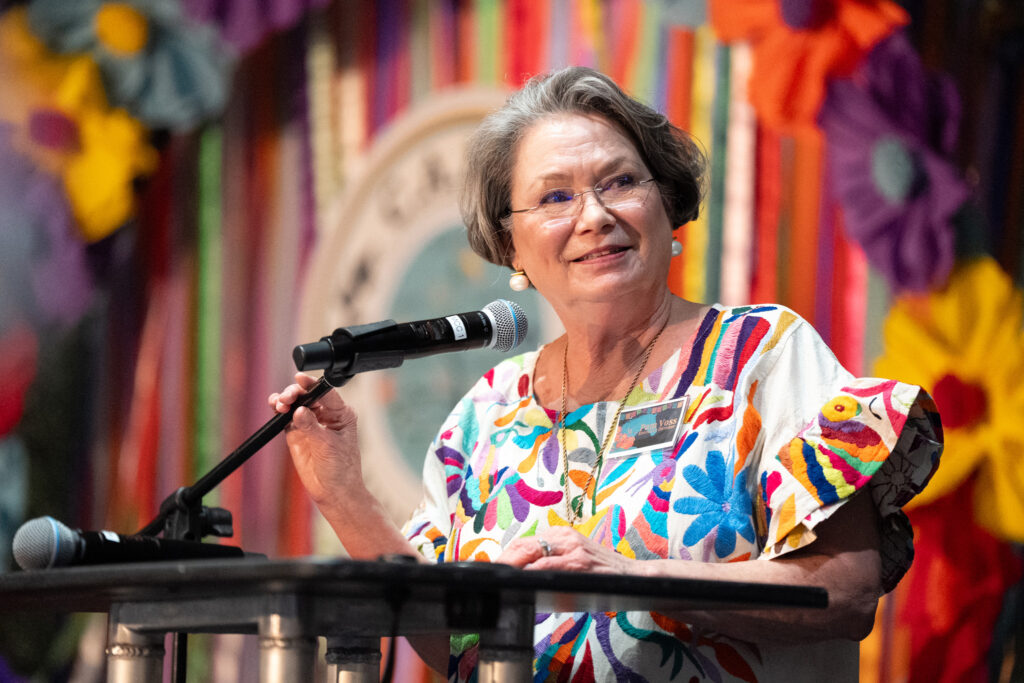
Pam Voss, Executive Director of C.A.M.P. University, welcomes guests during the gala.

(Pam Voss, Executive Director of C.A.M.P. University, welcomes guests during the gala)

I think this was my third year photographing the gala.

My connection to C.A.M.P. University started in one of those very Rio Grande Valley ways, where one relationship quietly leads to another.

Years ago, I was covering an event while working with the Valley Symphony Orchestra. I met one of the previous directors from C.A.M.P. University, and that eventually opened the door for me to help with their gala.

Then, when I showed up, I realized another connection was already there.

Pam Voss, the Executive Director of C.A.M.P. University, is married to Pastor Chris Voss.

Chris was one of my friends from one of the very first Bible studies I attended (Bible Study Fellowship).

Small world.

That’s something I’ve always loved about the Rio Grande Valley. You can walk into a gig thinking it’s just another assignment, and then suddenly there is a connection. A bible study connection. A client connection. A friend from years ago. Someone who knows someone you know.

It reminds you that community is not just a word people use in speeches.

Sometimes it is standing right in front of you.

More Than a Gala

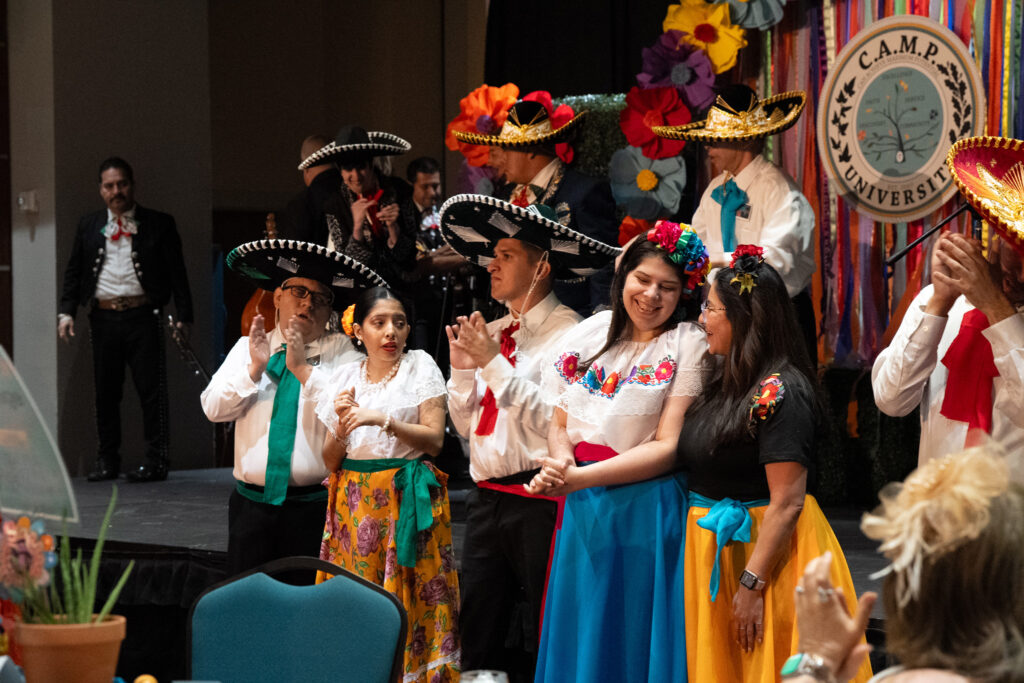
C.A.M.P. University members and supporters during Night at the Races gala

(C.A.M.P. University members and supporters take part in the evening’s celebration)

C.A.M.P. University serves adults with special needs after high school.

That part matters.

For a lot of families, high school gives structure. There are teachers, schedules, activities, classmates, routines, and support systems. But after graduation, families can be left asking, “What now?”

That is where an organization like C.A.M.P. University becomes so important.

It gives adults with special needs a place to continue growing, learning, socializing, building skills, and being part of something.

And honestly, when you see the support in the room at the gala, it warms your heart.

You see people buying tables.

You see people sponsoring races.

You see people dressed up and laughing.

You see people giving, not because they have to, but because they believe in the work.

That is what I enjoy about photographing nonprofit events.

Yes, I’m there to take the clean photos. The sponsor photos. The room shots. The details. The people on stage. The moments that help the organization promote the event next year.

But I’m also watching the room.

I’m watching how people respond.

I’m watching the little moments that tell you whether an event has a heartbeat.

This one does.

The Fun Makes It Work

One thing I respect about this gala is that it does not feel heavy.

It could.

The mission is serious. The need is real. The families being served have real concerns and real hopes for their loved ones.

But the event itself has joy in it.

That is not a small thing.

The Night at the Races theme gives people permission to relax, dress up, cheer, laugh, and enjoy the night. And with it falling on Cinco de Mayo this year, that joy felt even more colorful.

The room had big hats, bright outfits, mariachi music, colorful decor, and people who were clearly having a good time.

That matters.

Because good nonprofit work needs support, but it also needs energy. It needs people to come back. It needs people to bring friends. It needs people to feel connected to the mission instead of feeling like they just attended another formal dinner.

When the room is cheering for a sponsored horse on the screen, it may look like everyone is just having fun.

And they are.

But that fun is helping keep something meaningful going.

The Photos That Stayed With Me

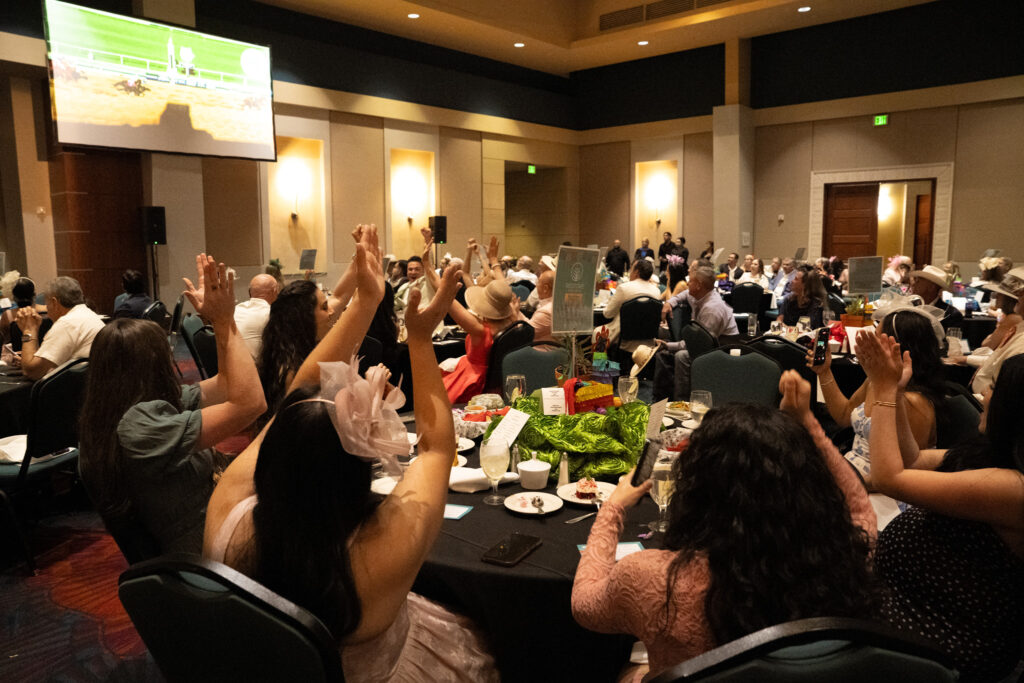
Guests cheering during C.A.M.P. University Night at the Races gala in the Rio Grande Valley

(Guests cheer during one of the sponsored races at C.A.M.P. University’s Night at the Races gala.)

There were a few images from the night that stayed with me.

One was the room cheering during the video races. Hands were in the air, people were laughing, and everyone was locked into the screen waiting to see which horse would win.

That photo says a lot about the night.

It was loud.

It was fun.

It was exactly what the event was supposed to feel like.

Another image that stood out was the colorful horse decoration near the entrance. It was bright, festive, and full of personality. It told you right away that this was not going to be a stiff event.

Then there was the image of Pam Voss speaking.

I always think leadership photos matter at nonprofit events because people need to see the faces behind the work. These organizations do not run by accident. There are people planning, calling, asking, organizing, carrying details, and making sure the mission keeps moving.

There was also a quiet hug that I photographed during the night.

I don’t know the full story behind that moment, and I don’t need to.

The photo says enough.

It was connection.

It was trust.

It was one of those small moments that reminds you why photography still matters.

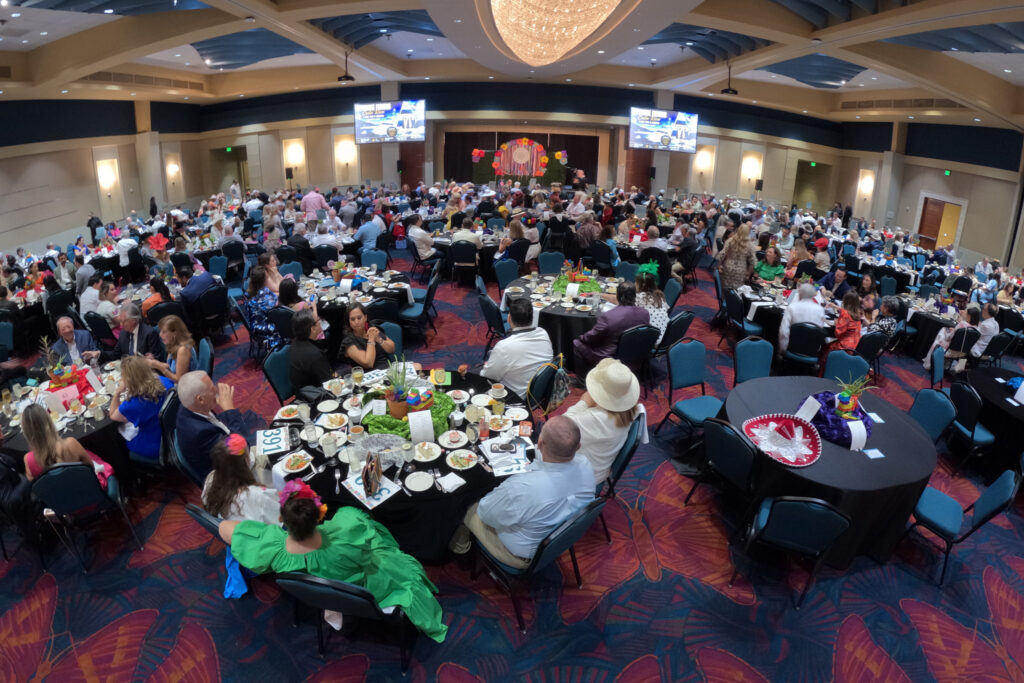
And then there were the wide photos of the room. A full ballroom. Tables filled. People dressed up. People giving. People paying attention. People showing up.

That is part of the story too.

Sometimes the wide shot is not the most emotional image, but it shows scale. It shows support. It shows that people made the decision to be there.

Why These Events Matter to Photograph

A quiet moment of connection during the C.A.M.P. University gala.

(A quiet moment of connection during the C.A.M.P. University gala)

As a photographer, events like this are a good reminder that the job is not only to document what happened.

It is to help people remember why it mattered.

The wide shot of the room matters because it shows support.

The photos of people dressed up matter because they show the personality of the night.

The candid laughs matter because they show the energy.

The sponsor moments matter because they show who helped make it possible.

The small interactions matter because they remind people that this is not just a fundraiser. It is a community gathering around a mission.

That is the part I care about most.

I don’t want the photos to feel like a checklist. I want them to feel like the night actually felt.

Because later, when the event is over, the decorations are packed up, and everyone goes home, the photos are what help the story stay alive.

They help C.A.M.P. University show future supporters what the night looked like.

They help donors see that their support is part of something alive.

They help remind the people in the room that they were part of a good thing.

A Small World, A Good Cause

A full room of guests gathered to support C.A.M.P. University.

(A full room of guests gathered to support C.A.M.P. University)

The older I get, the more I appreciate how often life circles back around.

I met people connected to C.A.M.P. University through other work. I walked into the gala and found an old Bible study connection through Pastor Chris Voss. I’ve now photographed the event multiple years.

And every time, I leave reminded that good work is usually carried by a lot of people most of us never fully see.

People planning.

People donating.

People volunteering.

People inviting friends.

People buying tables.

People showing up dressed for the Derby, celebrating Cinco de Mayo, and cheering at a video horse race because they know the night is about something bigger than the race.

That is the part that sticks with me.

A gala can be fun.

It can be loud.

It can be full of color and laughter.

But when it is connected to a mission like C.A.M.P. University, it becomes more than a night out.

It becomes one more way a community says, “We see this work, and we want to help.”

I was grateful to be there again.

And I was grateful to help tell a small part of the story.
Dentists Who Care Celebrates Ribbon Cutting in McAllen

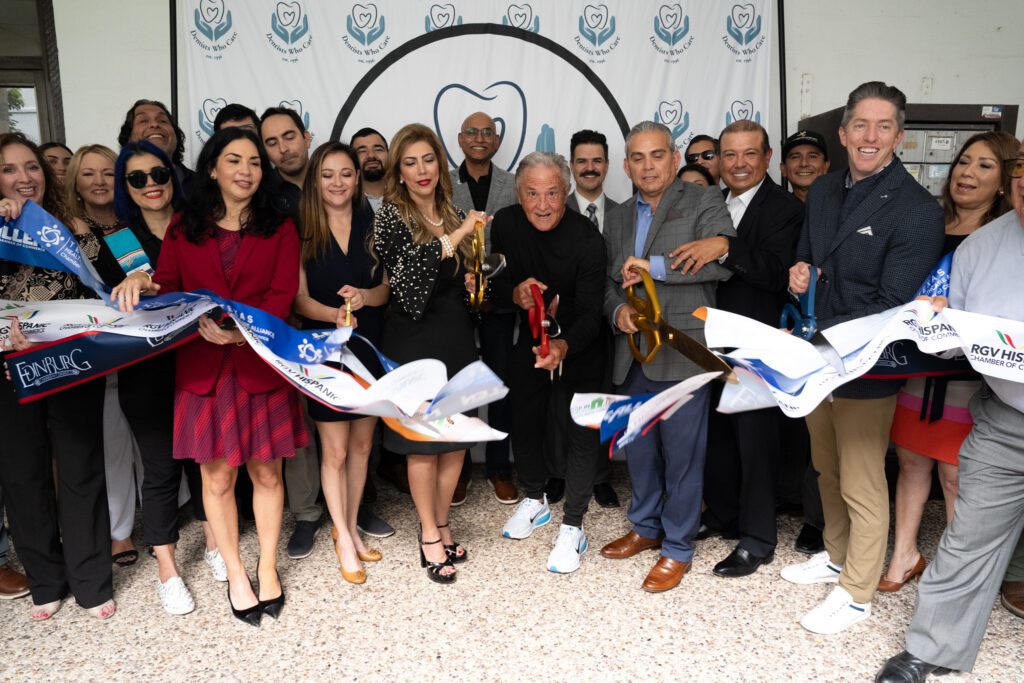
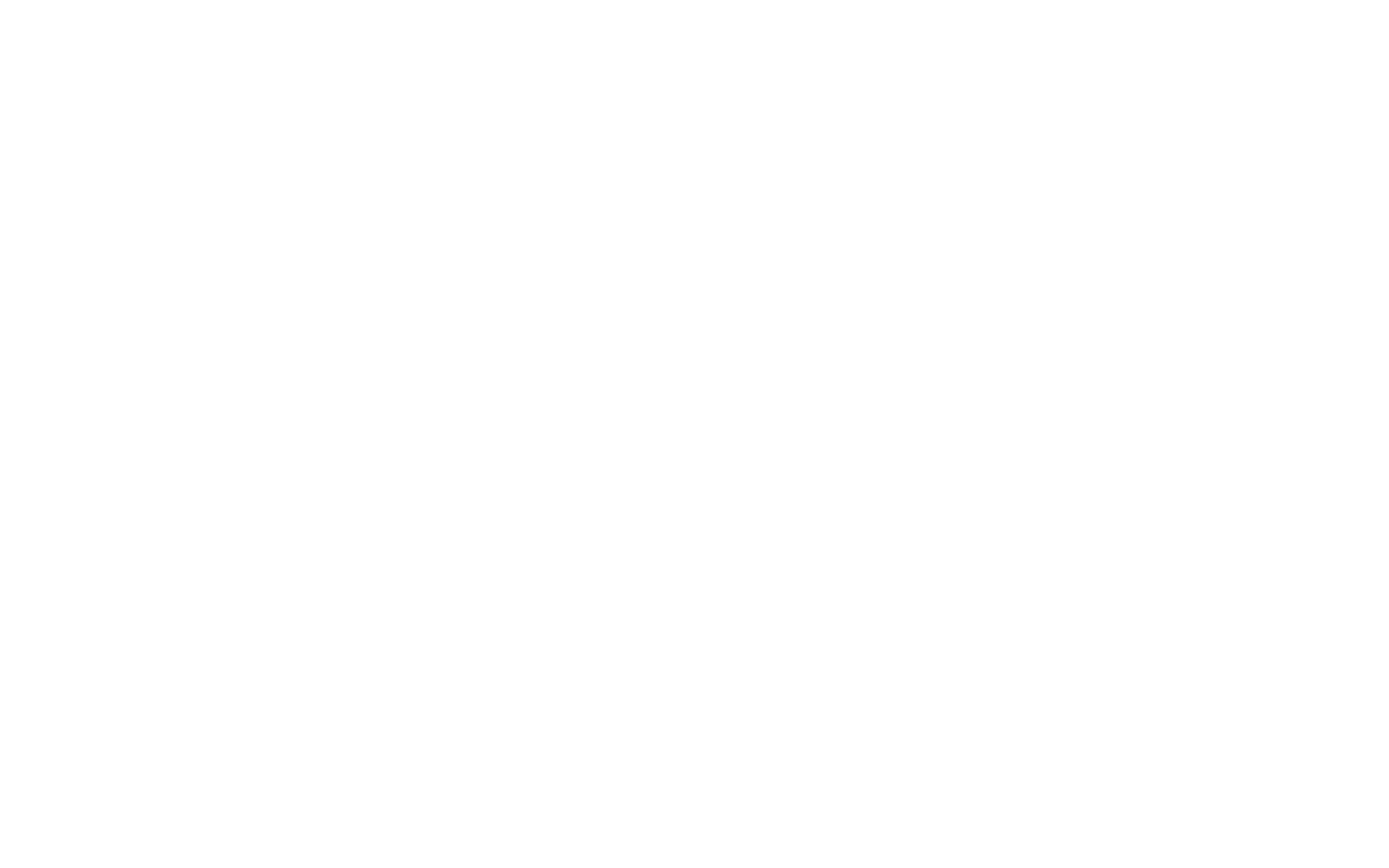
I had the opportunity to photograph the Dentists Who Care ribbon cutting in McAllen, and it was great to see how many people came out to support them.

Several chambers of commerce joined the celebration, along with local leaders, board members, dentists, volunteers, supporters and families. It was a packed house, but more importantly, you could tell the people there understood how much this organization means to the Rio Grande Valley.

Dentists Who Care helps people in our community receive dental care when they may not have the insurance or financial means to get it on their own. Dental problems can affect much more than a person’s smile. They can make it difficult to eat, sleep, work or even feel comfortable speaking to other people. For a family already struggling to cover everyday expenses, dental care can easily be delayed until the problem becomes much worse.

That is why their work matters.

It is one thing to live and do business in the Valley. It is another thing to give your time, knowledge and resources back to the people who live here. Dentists Who Care has been doing that for years, with local dentists and volunteers stepping forward to serve their own community.

The turnout at the ribbon cutting said a lot. People from across the Valley came together not only to celebrate a new chapter for the organization, but also to recognize the work already being done.

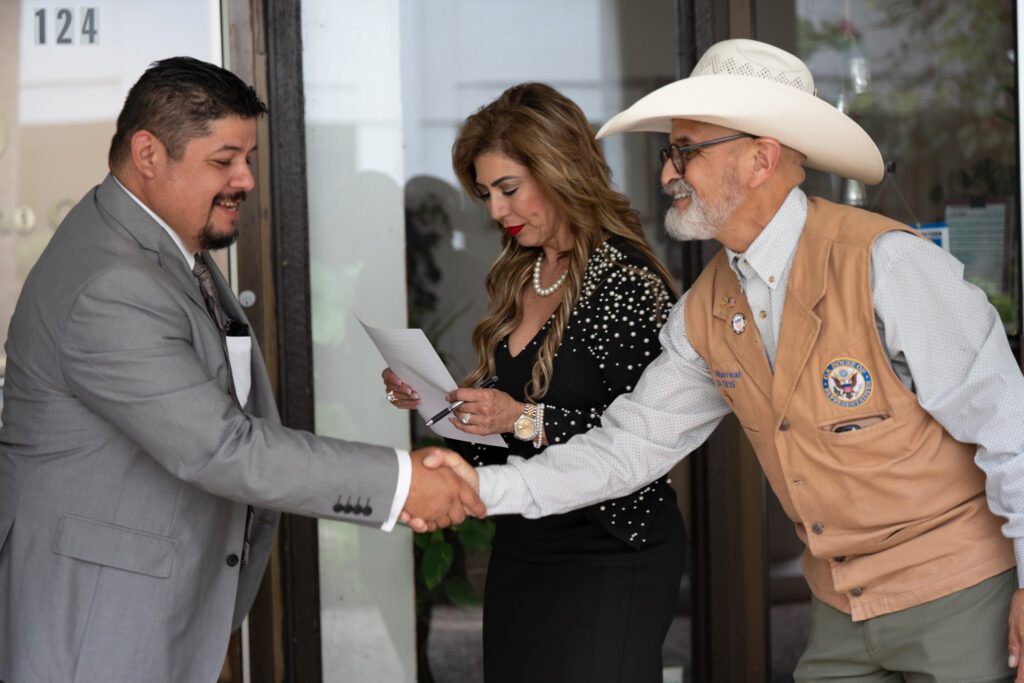
I was glad to be there to document the speeches, conversations, handshakes and, of course, the ribbon cutting itself. Congratulations to everyone involved with Dentists Who Care, and thank you for the work you continue to do for families throughout the Rio Grande Valley.

The Teacher Who Made Journalism Feel Possible

A Bright Spot at Morris Jr. High

I’ve been thinking lately about how certain people influence your life in small ways.

Not always in some big dramatic movie scene. Sometimes it’s just a teacher saying something in class. Sometimes it’s the way they carry themselves. Sometimes it’s the way they talk about a world you didn’t even know existed yet.

For me, one of those people was Ms. Lewis, my English teacher at Morris Jr. High in McAllen.

Back then, I was just trying to get through school. I wasn’t always confident. There were seasons where I enjoyed school, and then there were times when I honestly dreaded going to class.

Jr. High can be a strange age. You’re old enough to start wondering who you might become, but young enough that you don’t really know what any of it means yet.

Ms. Lewis was one of the bright spots.

Keely Lewis honored at the Puppy Love Gala in McAllen Texas

(Keely Lewis at the 2026 PVAC Puppy Love Gala)

She was kind. She was positive. She made class feel like a place I actually wanted to be. And she would sometimes talk about her degree in journalism.

At that age, I didn’t fully understand how someone even got a degree in journalism. I just knew it sounded different. I had never heard of something like that I thought that was such a cool degree!  Telling stories and getting to meet people from all walks of life.

It gave me something to hope for.

Years later, I would go on to earn my communications degree from UTPA in 1999, with journalism becoming a major part of the way I saw the world.

I don’t think I fully realized until much later how much that mattered.

Sometimes a teacher opens a door without even knowing they opened it. They say something in passing, and a student carries it for years.

The Debate Lesson I Never Forgot

One memory from her class has stayed with me.

I volunteered for a debate RIGHT before the lunch break. I don’t remember all the details, but I remember that I didn’t really know which side I was supposed to stand on.

I was flip-flopping. I just jumped in and tried to wing it.

And I got CRUSHED (it wasn’t pretty).

I was embarrassed. At that age, embarrassment feels bigger than it really is. It feels like everyone saw you fail and no one will ever forget it.

But Ms. Lewis didn’t make me feel stupid. She pulled me aside later and told me it was okay. It wasn’t the end of the world.

Then she gave me advice I still think about.

She told me that when you enter an arena like that, you need to have something firm to stand on. If you don’t, you’re going to lose every time.

That was about debate, but it was also about life.

It was about knowing what you believe. It was about preparation. It was about walking into a room with some kind of foundation under your feet.

At the time, I probably didn’t understand the weight of that lesson. I was just a kid who had been embarrassed in class.

But looking back, that little moment followed me into my work as a photographer, storyteller, and business owner.

How That Lesson Connects to Photography

Photography is not just about pointing a camera at someone.

At least not the kind of work I care about.

It’s about knowing what you’re trying to say. It’s about having a point of view. It’s about walking into a room, a business, a hospital, a city department, or a portrait session and understanding that there is a story there.

You have to stand on something.

I didn’t know it then, but that was part of how I would learn to see people — not just as subjects in front of a camera, but as stories worth paying attention to.

Ms. Lewis also taught me something else, maybe without trying to.

She showed me that your degree, your job title, and your daily work do not have to fit inside one narrow box.

She had a journalism background, but she was teaching English. And she was doing it in a way that mattered.

She showed me that you can take what you know, what you love, and what you’ve lived, and let it show up wherever you are.

That is something I understand more now.

My own path has not been a straight line. Journalism, photography, video, websites, storytelling, small businesses, city projects, portraits, events — all of it connects in ways I couldn’t have explained when I was younger.

But the thread has always been story.
Why Good Teachers Still Matter

Keely Lewis honored at the Puppy Love Gala in McAllen Texas

(Keely and Byron Jay Lewis being recognized at the Puppy Love Gala)

The older I get, the more I think about teachers.

I think about how easy it is for society to sideline them. We talk about budgets, contracts, test scores, and politics. Teachers become part of some bigger argument, and we forget that they are standing in front of real kids every day.

Kids who are struggling.

Kids who are listening.

Kids who may not say much in the moment, but who will remember something 25 or 30 years later.

My sisters are both educators. My mother is a retired social worker and a former elementary teacher in La Joya. So I’ve seen it from different angles.

Good teachers leave marks that don’t always show up on paper.

They shape confidence.

They plant ideas.

They make certain futures feel possible.

Finding Her Again Years Later

Keely Lewis honored at the Puppy Love Gala in McAllen Texas

(A moment from the Puppy Love Gala honoring Keely Lewis)

Recently, I came across Ms. Lewis again in a completely different season of life.

Not as the teacher I remembered from Jr. High, but as someone being recognized in the community for her work and service.

That hit me in a way I didn’t expect.

Because sometimes people disappear from your life for decades, and then they pop back up and remind you that they were part of your story all along.

Looking back now, after years of photographing people, businesses, and community stories across the Rio Grande Valley, I can see how much those early teachers shaped the way I see people.

I don’t know if Ms. Lewis ever knew the impact she had on me.

Most teachers probably don’t.

But I hope they know that the work matters. I hope they know that the kindness matters. I hope they know that the words they say in a classroom can follow a student for the rest of his life.

For me, Ms. Lewis made journalism feel possible.

She made class feel good during a time when school didn’t always feel that way.

And she taught me that if you’re going to step into the arena, you better know what you’re standing on.

I’m still learning that lesson.

But I’m grateful she was one of the people who taught it to me.