February 2026

The Teacher Who Made Journalism Feel Possible

A Bright Spot at Morris Jr. High

I’ve been thinking lately about how certain people influence your life in small ways.

Not always in some big dramatic movie scene. Sometimes it’s just a teacher saying something in class. Sometimes it’s the way they carry themselves. Sometimes it’s the way they talk about a world you didn’t even know existed yet.

For me, one of those people was Ms. Lewis, my English teacher at Morris Jr. High in McAllen.

Back then, I was just trying to get through school. I wasn’t always confident. There were seasons where I enjoyed school, and then there were times when I honestly dreaded going to class.

Jr. High can be a strange age. You’re old enough to start wondering who you might become, but young enough that you don’t really know what any of it means yet.

Ms. Lewis was one of the bright spots.
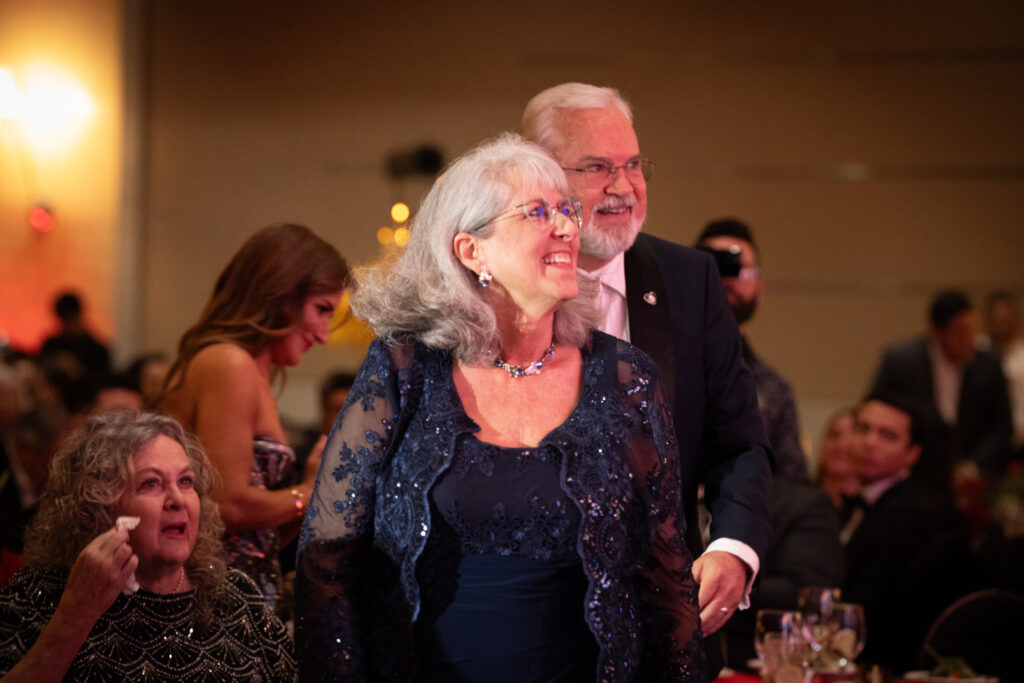
Keely Lewis honored at the Puppy Love Gala in McAllen Texas

(Keely Lewis at the 2026 PVAC Puppy Love Gala)

She was kind. She was positive. She made class feel like a place I actually wanted to be. And she would sometimes talk about her degree in journalism.

At that age, I didn’t fully understand how someone even got a degree in journalism. I just knew it sounded different. I had never heard of something like that I thought that was such a cool degree!  Telling stories and getting to meet people from all walks of life.

It gave me something to hope for.

Years later, I would go on to earn my communications degree from UTPA in 1999, with journalism becoming a major part of the way I saw the world.

I don’t think I fully realized until much later how much that mattered.

Sometimes a teacher opens a door without even knowing they opened it. They say something in passing, and a student carries it for years.

The Debate Lesson I Never Forgot

One memory from her class has stayed with me.

I volunteered for a debate RIGHT before the lunch break. I don’t remember all the details, but I remember that I didn’t really know which side I was supposed to stand on.

I was flip-flopping. I just jumped in and tried to wing it.

And I got CRUSHED (it wasn’t pretty).

I was embarrassed. At that age, embarrassment feels bigger than it really is. It feels like everyone saw you fail and no one will ever forget it.

But Ms. Lewis didn’t make me feel stupid. She pulled me aside later and told me it was okay. It wasn’t the end of the world.

Then she gave me advice I still think about.

She told me that when you enter an arena like that, you need to have something firm to stand on. If you don’t, you’re going to lose every time.

That was about debate, but it was also about life.

It was about knowing what you believe. It was about preparation. It was about walking into a room with some kind of foundation under your feet.

At the time, I probably didn’t understand the weight of that lesson. I was just a kid who had been embarrassed in class.

But looking back, that little moment followed me into my work as a photographer, storyteller, and business owner.

How That Lesson Connects to Photography

Photography is not just about pointing a camera at someone.

At least not the kind of work I care about.

It’s about knowing what you’re trying to say. It’s about having a point of view. It’s about walking into a room, a business, a hospital, a city department, or a portrait session and understanding that there is a story there.

You have to stand on something.

I didn’t know it then, but that was part of how I would learn to see people — not just as subjects in front of a camera, but as stories worth paying attention to.

Ms. Lewis also taught me something else, maybe without trying to.

She showed me that your degree, your job title, and your daily work do not have to fit inside one narrow box.

She had a journalism background, but she was teaching English. And she was doing it in a way that mattered.

She showed me that you can take what you know, what you love, and what you’ve lived, and let it show up wherever you are.

That is something I understand more now.

My own path has not been a straight line. Journalism, photography, video, websites, storytelling, small businesses, city projects, portraits, events — all of it connects in ways I couldn’t have explained when I was younger.

But the thread has always been story.

Why Good Teachers Still Matter
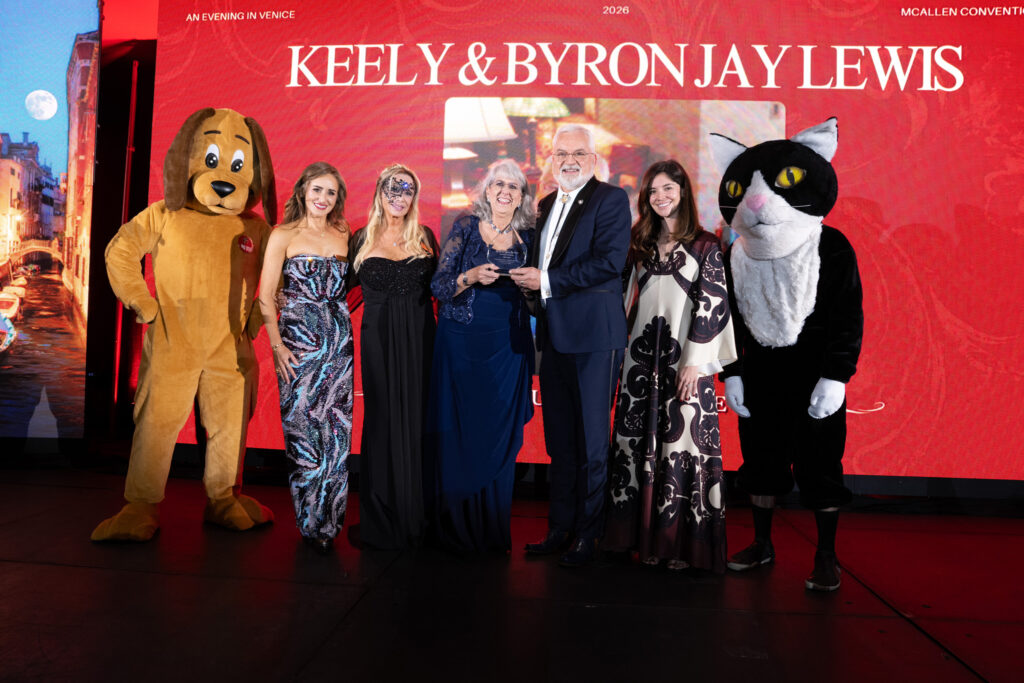
Keely Lewis honored at the Puppy Love Gala in McAllen Texas

(Keely and Byron Jay Lewis being recognized at the Puppy Love Gala)

The older I get, the more I think about teachers.

I think about how easy it is for society to sideline them. We talk about budgets, contracts, test scores, and politics. Teachers become part of some bigger argument, and we forget that they are standing in front of real kids every day.

Kids who are struggling.

Kids who are listening.

Kids who may not say much in the moment, but who will remember something 25 or 30 years later.

My sisters are both educators. My mother is a retired social worker and a former elementary teacher in La Joya. So I’ve seen it from different angles.

Good teachers leave marks that don’t always show up on paper.

They shape confidence.

They plant ideas.

They make certain futures feel possible.

Finding Her Again Years Later
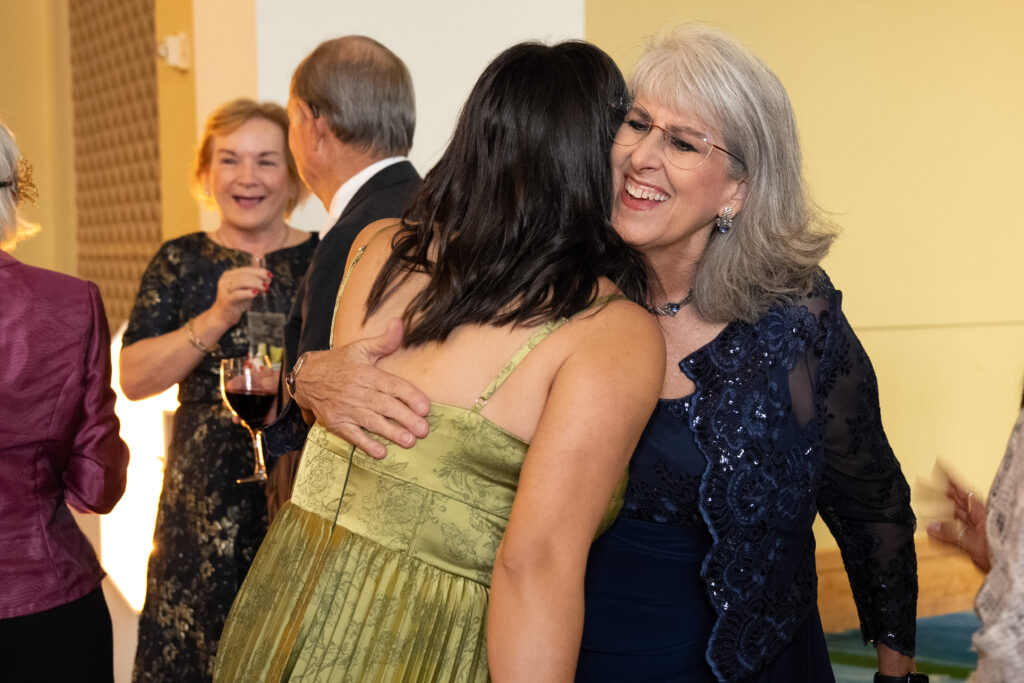
Keely Lewis honored at the Puppy Love Gala in McAllen Texas

(A moment from the Puppy Love Gala honoring Keely Lewis)

Recently, I came across Ms. Lewis again in a completely different season of life.

Not as the teacher I remembered from Jr. High, but as someone being recognized in the community for her work and service.

That hit me in a way I didn’t expect.

Because sometimes people disappear from your life for decades, and then they pop back up and remind you that they were part of your story all along.

Looking back now, after years of photographing people, businesses, and community stories across the Rio Grande Valley, I can see how much those early teachers shaped the way I see people.

I don’t know if Ms. Lewis ever knew the impact she had on me.

Most teachers probably don’t.

But I hope they know that the work matters. I hope they know that the kindness matters. I hope they know that the words they say in a classroom can follow a student for the rest of his life.

For me, Ms. Lewis made journalism feel possible.

She made class feel good during a time when school didn’t always feel that way.

And she taught me that if you’re going to step into the arena, you better know what you’re standing on.

I’m still learning that lesson.

But I’m grateful she was one of the people who taught it to me.
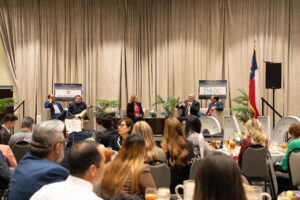
Mission Chamber Luncheon with Congressman Henry Cuellar | Mission, Texas Event Photography

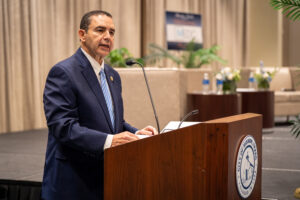
The Mission Chamber of Commerce hosted another packed Buenas Tardes Luncheon at the Mission Event Center in Mission, Texas — and like usual, it was a full house.

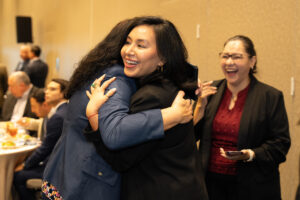
Before the keynote began, the room was active. Business owners, city leaders, and community members were catching up, shaking hands, and making connections. These events are as much about relationships as they are about the program itself.

This month’s featured speaker was Congressman Henry Cuellar, who addressed border security and how federal decisions impact businesses here in the Rio Grande Valley. In a region where trade and cross-border commerce are part of everyday life, those conversations carry weight.

A Strong Turnout in Mission, TX

The Mission Chamber consistently brings together a solid mix of local leadership and entrepreneurs. That access — business owners in the same room with elected officials — is one of the reasons these luncheons continue to grow.

From a photography standpoint, events like this require awareness. You’re watching for real interaction — handshakes, reactions, side conversations, moments that show engagement. That’s what makes event coverage feel authentic instead of staged.

A Quick Conversation (And a First)

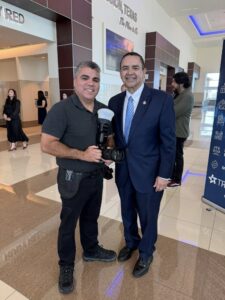
After the program wrapped up, I had a few minutes to speak with Congressman Cuellar. He asked about my upbringing, so I shared a little about my parents and how they served their community.

Then he asked to take a photo with me.

That’s a first.

Usually I’m the one asking everyone else.

Why Professional Event Photography Matters

When the event is over and the room clears out, the photos are what remain.

Strong event photography allows organizations to:

  • Promote future events

  • Highlight community involvement

  • Provide sponsors with visual value

  • Document leadership and civic engagement

If you’re planning a chamber luncheon, corporate event, or leadership gathering in Mission, McAllen, or anywhere in the Rio Grande Valley, professional photography ensures the moments that matter don’t disappear once the chairs are stacked and the lights dim.

2026 McAllen State of the City: Inside a Packed Room of Local Leadership

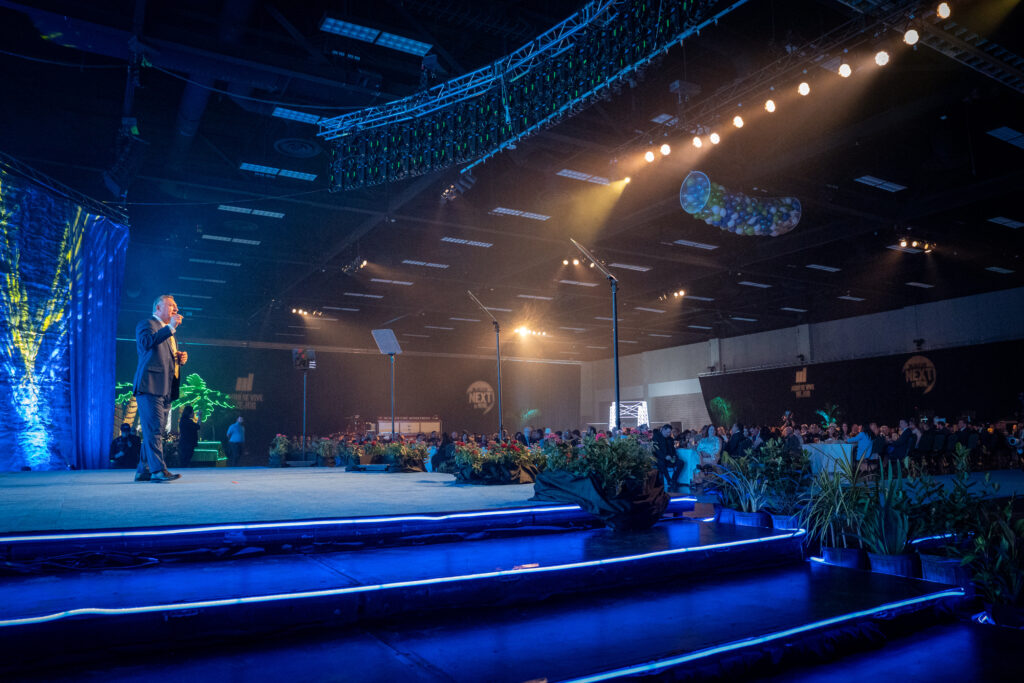
This year’s McAllen State of the City was the first one I’ve been invited to cover, and it was anything but small.

The room was full — not just seats filled, but wall-to-wall conversations before and after the program. City leadership, business owners, community partners, and familiar faces from across the Rio Grande Valley were all there. From a visual standpoint, it was one of the larger civic events I’ve photographed in McAllen.

I had a chance to catch up with several McAllen commissioners I’ve worked with over the years. One of them joked with me, “Which district are you in?” knowing full well I’m based out of Mission. It was a quick laugh, but it also highlighted how closely connected Valley cities really are. The work done in McAllen doesn’t stop at city limits.

When Mayor Javier Villalobos  took the stage, the tone was confident and direct. He spoke proudly about what the city has accomplished and about the team behind that progress. The focus wasn’t on one single achievement, but on sustained effort — public safety, development, and long-term planning all working together.

There were new announcements for the city, along with reminders of how much groundwork has already been laid. As someone who grew up in McAllen and still works here regularly, it was a reminder of how much happens behind the scenes that most people never see day to day.

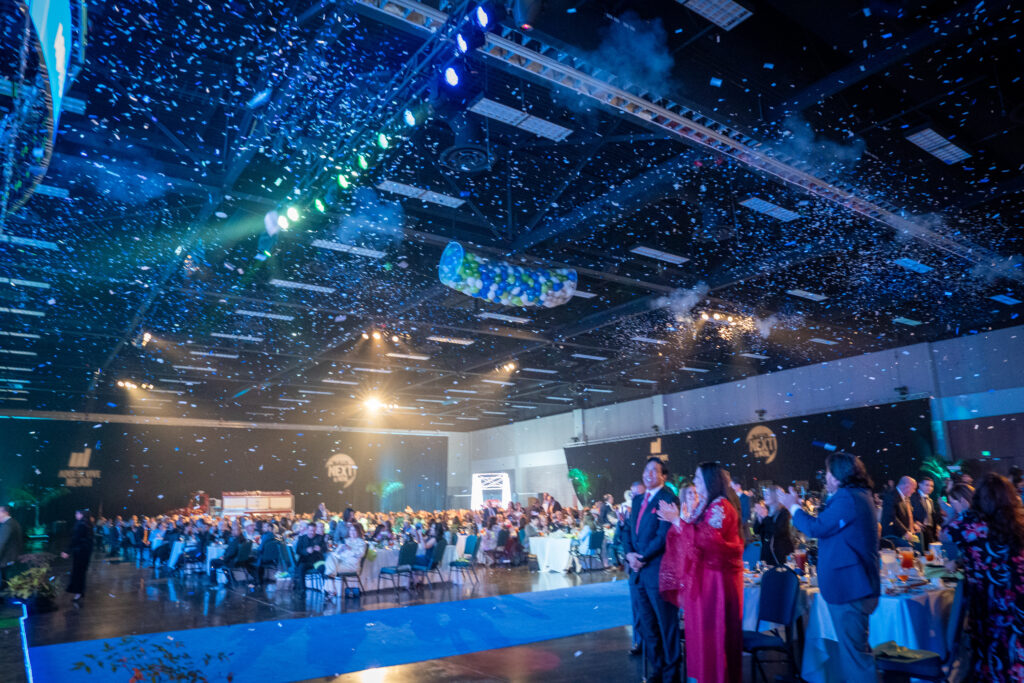
What stood out wasn’t just the speech, but the room itself. The size of the crowd, the mix of attendees, and the conversations afterward all pointed to a city that’s actively moving forward. This wasn’t a ceremonial event — it felt like a working room.

From a photography standpoint, the night delivered exactly what I look for: strong moments on stage, wide angles showing just how packed the venue was, and candid interactions that tell a broader story than any single frame alone.

Being invited to document the McAllen State of the City was an honor. Having grown up here, it’s been rewarding to see how the city continues to evolve — and to be trusted to capture moments that reflect where McAllen is and where it’s headed.

AI Changed Everything. Clients Still Want It to Look Real.

Abel Riojas, Rio Grande Valley Commercial & Headshot Photographer

AI has changed the creative world faster than anyone expected.
It’s everywhere now—writing copy, generating images, building concepts, filling decks.

AI Image Retouching

As a commercial photographer and headshot photographer in the Rio Grande Valley, I see AI references constantly in briefs and visual direction.

But there’s one thing I hear from clients over and over, regardless of industry:

“I don’t want it to look fake.”

Sometimes they say it another way:
“I don’t mind a little adjustment—I just want it to look like me.”

That distinction matters.

The Issue Isn’t AI. It’s Believability.

AI is very good at producing images that look impressive at first glance. – Sharp. Clean. Polished.

But polished isn’t the same as believable.

Many AI-generated visuals feel generic, over-smoothed, or disconnected from reality. Even when people can’t articulate what’s wrong, they feel it immediately.

For businesses, that matters.
Credibility matters.

No brand wants its marketing to feel artificial—especially in professional headshots, branding photography, or advertising where trust is part of the message.

Clients Aren’t Anti-Editing. They’re Anti-Losing Themselves.

Most clients aren’t asking for “no retouching.”
They’re asking for restraint. We’ve all seen the photo of someone you know and you can tell right away that “it’s not them”

In my commercial and headshot work across McAllen, Mission, and the greater Rio Grande Valley, clients want images that feel:

  • Polished, but human
  • Confident, not overproduced
  • Real, not synthetic

They want to recognize themselves in the image.

That balance doesn’t come from a preset or an AI prompt.
It comes from experience and judgment.

When Anyone Can Generate an Image, Taste Is the Difference.

AI has raised the baseline.
Technically competent images are easy to generate now.

What’s not easy is knowing:

  • What matters in the frame
  • What to leave alone
  • When an image stops feeling true

That’s where professional photography still wins.

The value isn’t the camera or the software.
It’s the decision-making.

Real Photography Carries Intent.

A real photograph carries intent:

  • Intentional lighting, not just brightness
  • A real moment, not a composite
  • A subject responding to a person, not an algorithm

That intent shows up—even if viewers can’t explain why.

It’s why many brands are quietly pulling back from AI-heavy visuals and returning to real photography for headshots, branding, and advertising.

“Sameness” doesn’t build trust.
Consistency and authenticity do.

The Bottom Line

AI isn’t going away. It will keep improving and to me that’s a good thing as long as it’s not dominating the narrative / photo message.

But clients still want images that feel real, credible, and personal.

Trying to compete with computers on speed or cost is a losing game.
Competing on judgment, taste, and understanding people isn’t.

Clients don’t want fake.
They want real—with intention.

That hasn’t changed.