Photographing the UTRGV Driscoll Tailgate & 2026 Home Opener

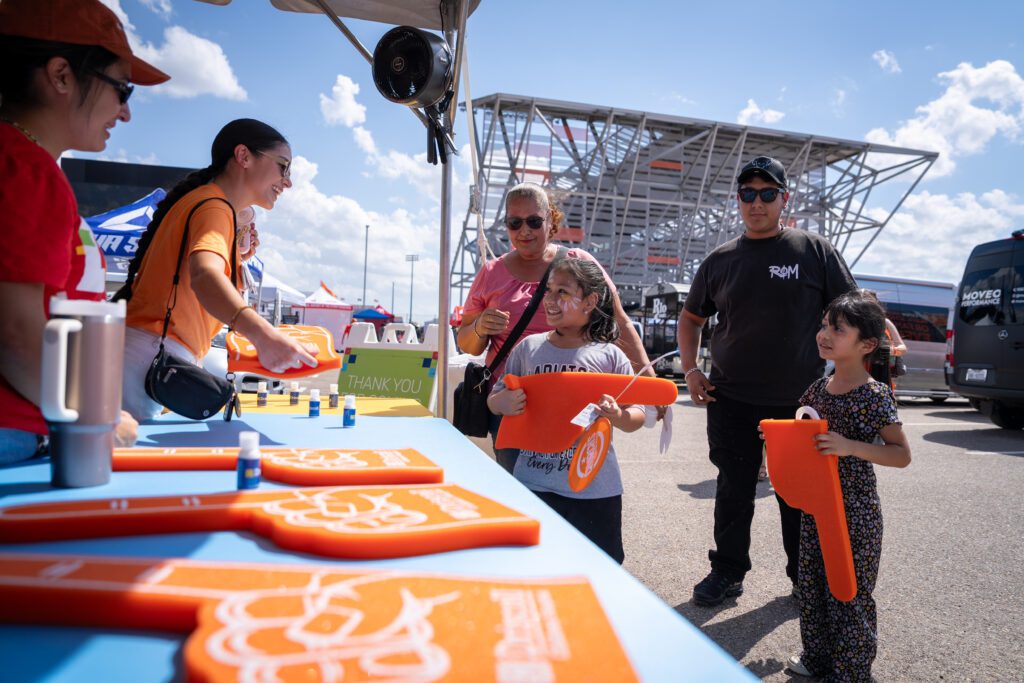
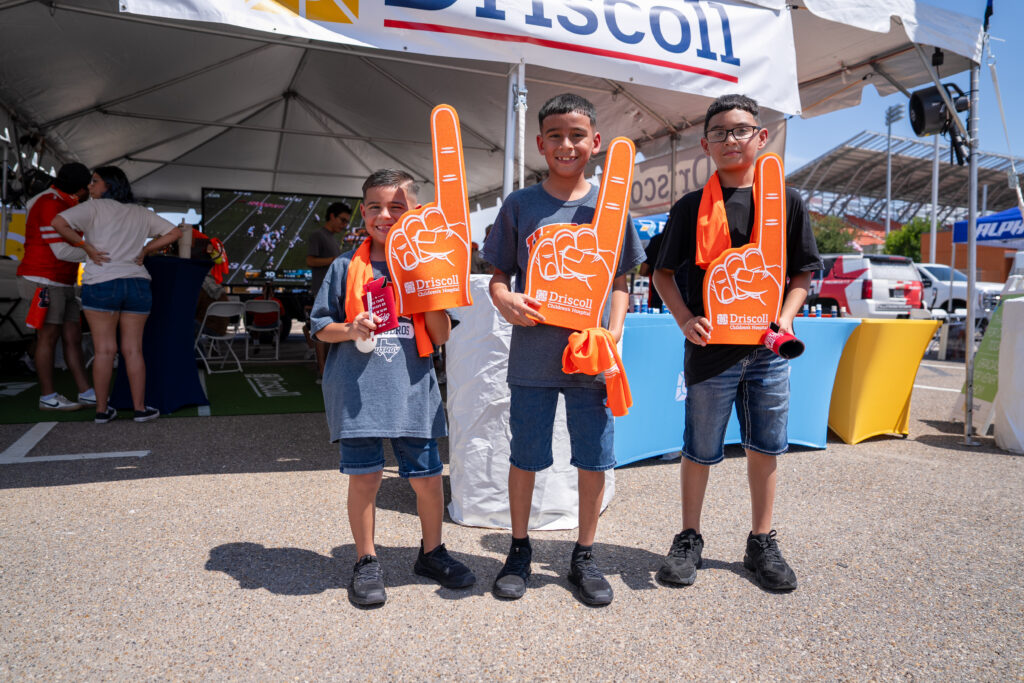
Yesterday I got to spend part of the afternoon and evening photographing the Driscoll Children’s Hospital area at the UTRGV tailgate before the Vaqueros kicked off their 2026 football season.

NOW that was a fun assignment!

I was out there for a few hours photographing people coming through the Driscoll tailgate area, families stopping by and just trying to capture what was going on around the tailgate.

There were Vaquero colors everywhere and you could tell people were ready for football to be back. I also got to catch up with some of the other groups that were out there, including Rio Bank and one of the local radio stations. One of the nice things about doing this for as long as I have is running into people I’ve worked around over the years.

One of my favorite things to photograph was actually pretty simple.  Driscoll was giving out these huge foam fingers and the kids loved them.  Their reactions were great. Those are usually the pictures I like anyway. Not necessarily the big posed moment, but the little things happening around it. A kid getting excited, somebody laughing or people just enjoying themselves.

Eventually it was game time and everybody started making their way inside.

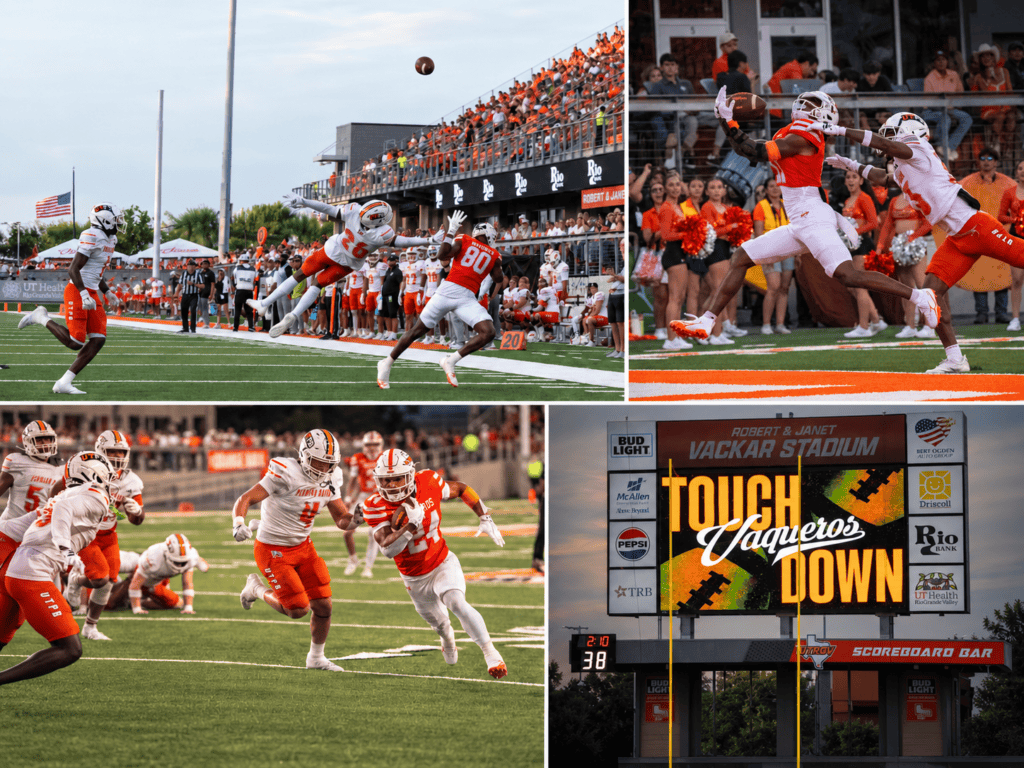
By then my assignment was getting pretty easy. I photographed some of the Driscoll signage around the stadium and stayed for a little while after kickoff.

I even got to shoot some football.

I haven’t photographed sports in a few years, so I was curious to see if I was rusty.

Thankfully, I wasn’t too bad.

Sports photography actually goes way back for me. I started shooting sports in high school, and later I got the chance to help out with our local CHL hockey team. That was really when I started falling in love with photography.  So being back on the field with a camera was a lot of fun and kind of felt like I never left.

UTRGV ended up beating UT Permian Basin 44-0, and apparently the crowd really was as big as it felt. They had 13,698 people there, a new program record.  (Not a bad way to start the season).

But probably my favorite part of the night happened after I was pretty much finished.  I took a minute and sat down on the edge of the field.  The teams and the other photographers were way down at the other end, so for a few minutes I basically had the whole end zone to myself.  I just sat there and looked around.  And it hit me.  I graduated from UTPA in 1999, long before it became UTRGV, and there is no way I would have imagined back then that one day our university would have a football team.  I always thought that if somebody ever figured out how to make college football happen down here, it would be huge. The 956 is football country.  (Then again, I guess all of Texas is football country).

But sitting there looking at the stadium, the field, the lights and all those people, I couldn’t help wondering how different some of my weekends in college would have been if we’d had something like this to look forward to.  This is only UTRGV football’s second season and the excitement doesn’t seem to be going anywhere. If anything, it feels bigger.

I hope that never dies.

Maybe one of these days I’ll get to come back without cameras hanging off of me, buy a ticket, sit in the stands and just enjoy a game.

Yesterday wasn’t that day.

But I did get to sit in the end zone by myself for a couple of minutes and take it all in.

The best seat in the house.

Event Photography at the 2026 Easterseals Rio Grande Valley Telethon

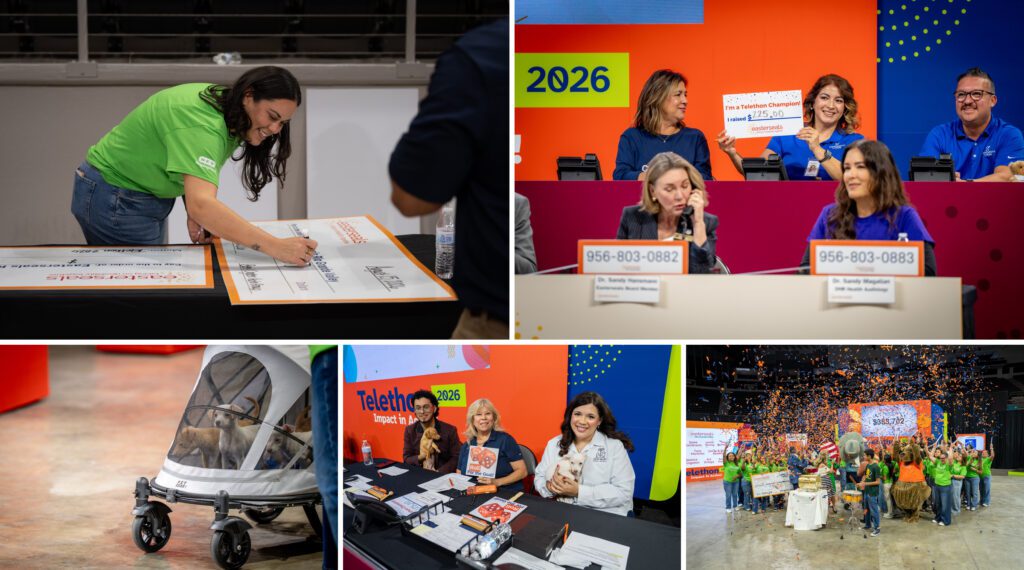
I was invited back to photograph the 2026 Easterseals Rio Grande Valley Telethon, and just like last year, it was held at the Burt Ogden Arena in Edinburg.

This is one of those assignments that reminds me why I still enjoy event photography after all these years. There is always something happening. You have people on stage, people working the phones, sponsors coming through, families being interviewed, television crews moving around, volunteers trying to keep everything running and about a hundred little moments happening in between all of that.

My job is basically to figure out where to point the camera.

Event Photography Is About More Than Photographing the Stage

I think sometimes people hear “event photography” and assume the photographer shows up, photographs whoever is speaking and gets a couple of wide shots of the room.

There is definitely some of that.  Buuuuuuuut that’s only part of the story.

At something like the Easterseals Telethon, I’m constantly moving around looking for the photographs that explain what the event actually felt like.

That means photographing the hosts and presentations, but also looking behind me to see what’s happening at the phone bank. It means getting the big check presentation and then noticing somebody laughing with the person sitting next to them.

Sometimes the best photograph isn’t happening anywhere near the stage.

That is really what I’m looking for.

The big moments tell you what happened. The smaller moments tell you what it felt like to be there.

Catching Up With People I’ve Known for Years

One of the things I enjoyed most about this year’s telethon really didn’t have anything to do with photography.

I’ve been doing this long enough now that I ran into photographer friends I’ve known for more than 30 years.

That’s a strange sentence to write.

I still remember when all of us were the younger news guys running around with cameras, and now we’re standing inside an arena talking about assignments we’ve done, people we’ve worked with and probably whatever piece of equipment we’re monkeying around with lately.

Some things never change.

I also ran into people from organizations I’ve worked with over the years, including Atlas and Hall, H-E-B and of course Driscoll Children’s Hospital.

That is one of the nice things about working throughout the Rio Grande Valley for this long. Eventually a big event starts feeling a little like a reunion.

Then the Cameras Went Live

Because this is a live telethon, everything has to keep moving.  Once the show starts, there really isn’t much room for stopping everything and saying, “Can we do that again?”  The hosts move from one segment to the next. Sponsors and board members come in with their teams. People rotate through the phone banks. Checks get presented. Families tell their stories.  Meanwhile the tv cameras, photographers and production people are moving around everybody trying not to become part of the story ourselves.

And somehow it works.

Honestly, it flowed pretty smoothly.

Each group that came in seemed to have its own strategy for raising money. One volunteer  told me her secret was calling all of her family from her own phone before somebody on live television could embarrass her by calling a friend sitting nearby.  That might be the most Rio Grande Valley fundraising strategy possible.

Everybody knows everybody down here.

Good Event Photography Has to Show the People Doing the Work

One thing I always try to photograph at events like this is the work happening behind the obvious stuff.

The people answering phones matter.  The volunteers matter.  The broadcast crew matters.  The sponsors standing around waiting for their segment matter.  Even the empty space, cameras, lights and equipment can help tell the story because they show the scale of what it takes to produce something like this.  Maybe that’s because I spent years working behind a video camera before my career became centered on photography.  Technology has changed tremendously since I started doing this (Social Media wasn’t a thing back in the 90s).

The storytelling part really hasn’t.  You’re still looking for a beginning, middle and end. You’re still watching people’s faces. You’re still trying to anticipate what happens next instead of reacting after it’s already over.  The camera is different.  The job really isn’t.

The Families Are Still the Heart of It

There were plenty of sponsors and recognizable faces at the telethon, but obviously the reason everybody was there was much bigger than that.  One of the things I’ve enjoyed about coming back is seeing some of the kids getting older and hearing how their stories have continued.  Then there are new families coming through who have been able to participate in Easterseals programs here in the Rio Grande Valley.  Those are the photographs I think become more important with time.  There were lots of smiles throughout the day, but there were tears too. Some of the teachers and educators came out to support the kids and cheer them on, and you could see that the relationships went far beyond whatever was happening during the broadcast.  You can’t manufacture that for a photograph.  You just have to recognize it when you see it.

And Then Somebody Brought Puppies

My personal favorite moment of the day — and I think I probably had plenty of company on this one — was when Palm Valley Animal Society showed up with puppies.

Not just puppies.

Puppies in a little stroller.

At that point I think everybody forgot about whatever else they were supposed to be doing for a minute.

Apparently the saying that everyone loves puppies still holds true in 2026.  (At least I’m going with it).

Those little moments are also exactly why I like photographing events. I can spend part of the day photographing a formal presentation, turn around and photograph a television camera operator working, photograph someone raising money on the phone and five minutes later I’m on the floor trying to get a photograph of puppies riding around in a stroller.

You never really know what you’re going to get.

Photographing the Whole Story

By the end of the telethon, Easterseals Rio Grande Valley had surpassed its fundraising goal.

Then came the celebration.  Confetti went everywhere, people cheered, everybody gathered together and for a few minutes you could see the payoff from all the work that had gone into the day – From a photography standpoint, that’s the photograph everybody expects.

But it works better when you have everything that came before it.

The phone calls.

The interviews.

The checks.

The television crews.

The volunteers.

The families.

The quiet moments.

The funny moments.

And yes, the puppies.

Put all of those photographs together and now you don’t just have photographs of an event.

You have the story of the event.

What I Look for When Photographing an Event

Every assignment is different, but there are a few things I’m almost always thinking about when I’m covering an event:

  • The establishing photograph. Where are we? What does this event look like?
  • The important people and moments. Speakers, presentations, sponsors, awards and anything the client specifically needs documented.
  • Real reactions. Laughter, concentration, excitement, emotion and interaction.
  • Details. Signage, branding, equipment, decorations and the little things that give the event its identity.
  • Behind the scenes. The people making everything happen are often part of the story too.
  • The unexpected stuff. That’s usually where some of my favorite photographs come from.

That approach comes from spending most of my career bouncing between editorial work, commercial assignments, portraits, video and events.

As a commercial photographer, I don’t really see those as completely separate things.

A portrait teaches you to watch faces.

Editorial photography teaches you to look for a story.

Commercial photography teaches you to understand what the client needs the photographs to communicate.

Event photography makes you do all of those things at once — except everything is moving and nobody is waiting for you.

Event Photography in the Rio Grande Valley

The 2026 Easterseals Telethon was another good reminder of why I enjoy photographing events throughout the Rio Grande Valley.

Yes, the client needs photographs.

But what I’m really trying to give them is a visual record they can use months or even years later to remember what happened, show the people who made it possible and tell the story to someone who wasn’t there.

That’s what I think good event photography should do.

And if somebody rolls through the next event with another stroller full of puppies, I’m definitely photographing that too.

Commercial Photography at a Congressional Record Ceremony in Pharr, Texas

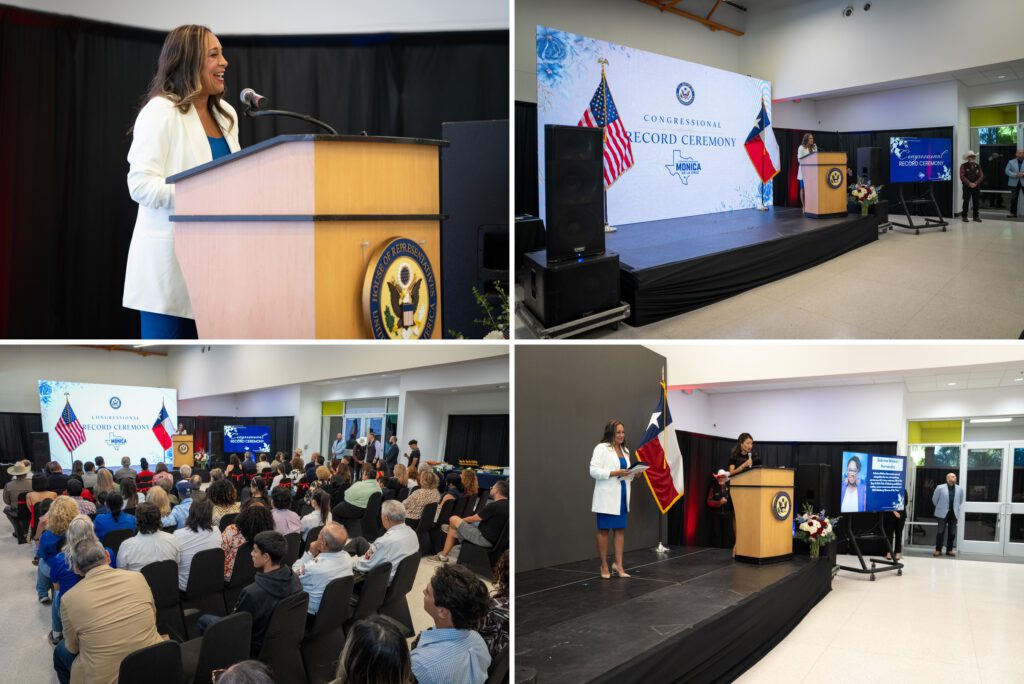
On August 13, 2026, I was invited to help photograph Congresswoman Monica De La Cruz‘s Congressional Record Ceremony in Pharr, Texas.

I’ve covered plenty of government and community events over the years, but this one was a little different.  The people being recognized weren’t simply receiving another award or plaque. Their accomplishments, service and stories had been entered into the Congressional Record.  That’s a pretty big accomplishment when you stop and think about it.

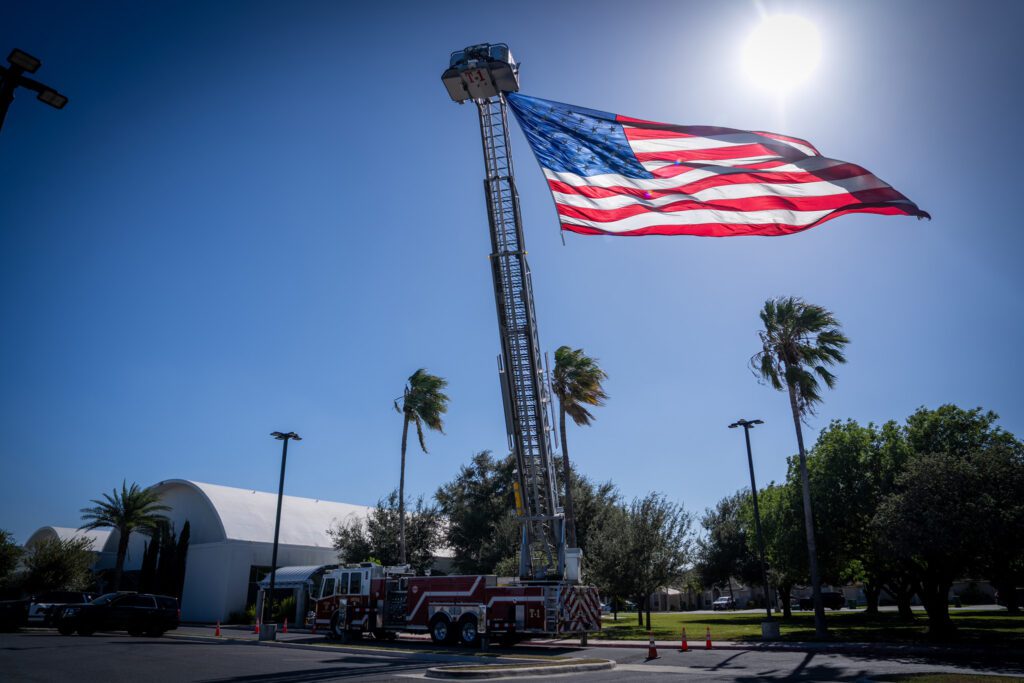
I actually made that photograph before I ever walked inside.

The Pharr Fire Department had this enormous American flag hanging from its ladder truck. The wind was moving it around, the palm trees were moving with it, and the South Texas sun was doing what the South Texas sun does.

Before photographing any event, I always try to find something that establishes where I am and gives the viewer a sense of the day.

That was it.

What Is a Congressional Record Ceremony?

I knew what the Congressional Record was in a general sense, but I had never really stopped to think about what it means when somebody from here in the Rio Grande Valley actually becomes part of it.

The Congressional Record is the official published record of the proceedings of the United States Congress. Members of Congress can also submit remarks recognizing people, organizations and accomplishments from their districts.

Congresswoman De La Cruz’s ceremony recognized South Texans whose accomplishments and service had been entered into that permanent record.

So I wouldn’t really call these traditional awards.

These were people’s stories being formally recognized and preserved.

That made the event a little more interesting to photograph.

The Story Starts Before the Program Does

One thing I’ve learned doing commercial photography is that an event doesn’t begin when somebody walks up to the microphone.

It starts when people walk through the door.

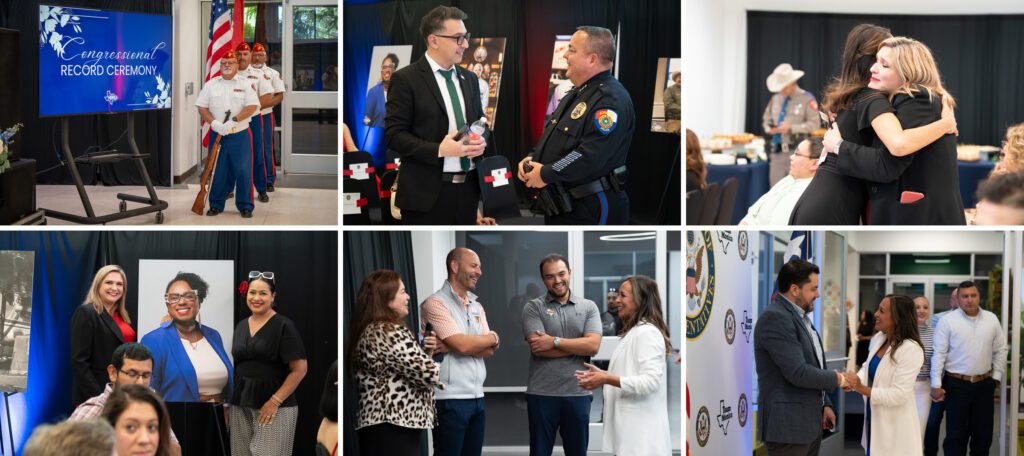
People were greeting each other, catching up, shaking hands and introducing family members. Law-enforcement officers were talking with guests. Honorees were arriving. There were hugs and plenty of conversations happening around the room.

Those are the photos I always hunt for.  The formal photographs tell you what happened.  The candid ones usually tell you what it felt like.

And because this is the Rio Grande Valley, there were plenty of familiar faces.

I also remembered Monica from years ago when we both crossed paths through NHPO here in the Valley. I served with the organization for several years myself.

I couldn’t tell you the exact year anymore, and NHPO wasn’t exactly famous for keeping perfect records, but I remember the people.

South Texas really can be a small place.

Everything Became Formal

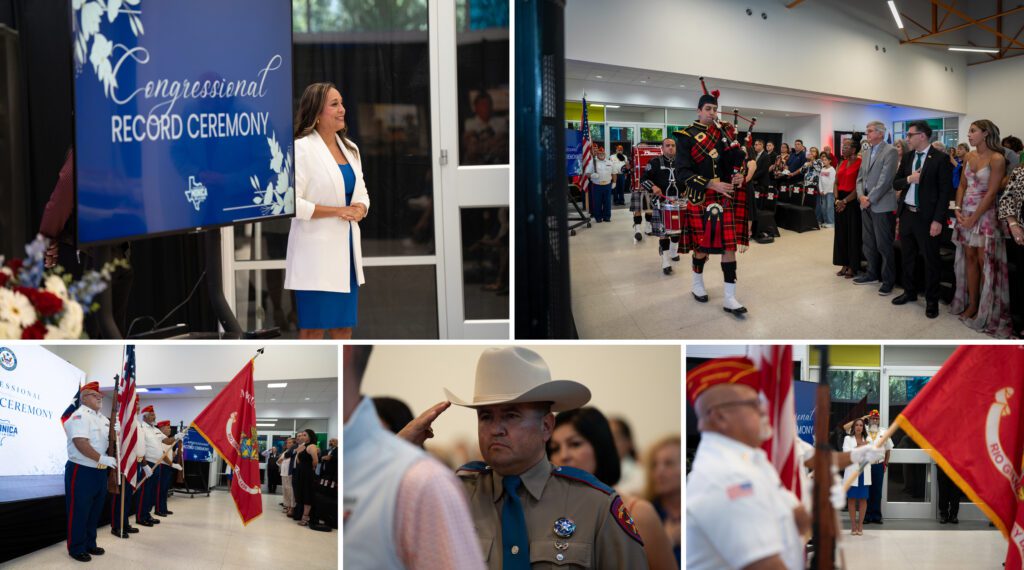
Once the ceremony started, the atmosphere changed quickly.

There was a color guard.

Bagpipes.

Flags.

Uniformed officers and veterans.

Everybody stood.

This is where covering an event gets interesting from a photography standpoint.

There’s an obvious photograph directly in front of you, but there may be three other pictures happening at exactly the same time.

Someone is coming down the aisle.

Someone else is saluting.

The flag is moving into position.

The audience is reacting.

You have to keep looking around.

You don’t get to stop everybody and ask them to do it again because you were pointed in the wrong direction.

Some Photographs Simply Cannot Be Missed

There is also a practical side to government event photography.

The client needs certain photographs.

Period.

The speaker at the podium.

The room.

The presentations.

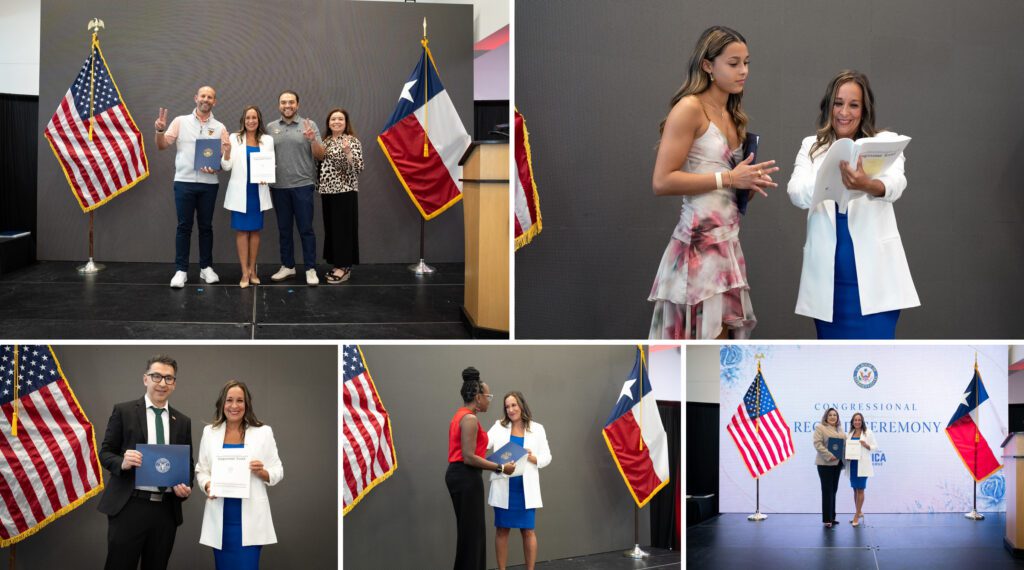
The honorees.

The Congressional Record.

The handshakes.

The group photographs.

Those pictures have to be there when the gallery is delivered.

That doesn’t mean I stop looking for better photos. It just means I make sure the assignment is covered before I start worrying about being clever.

The photographer’s favorite image and the client’s most useful image aren’t always the same photograph.

A professional photographer needs to come back with both.

Every Recognition Had a Different Story

Once the presentations began, I started understanding why the event mattered.

There wasn’t one type of person being recognized.

There were educators, law-enforcement officers, veterans, businesses, athletes and people who had spent years serving the community.

Some recognitions were celebratory.

Others were much more emotional.

That’s something a program or schedule can’t really tell you.

One minute people are laughing.

A few minutes later the room gets quiet.

Somebody starts talking about a person’s life, service or something they went through, and suddenly the mood changes completely.

As the photographer, I’m watching all of it.

Sometimes the photograph isn’t the person speaking.

Sometimes it’s the person listening.

Covering an Elected Official Without Turning It Into Politics

Since this assignment involved a member of Congress, I think this is worth saying.

I’ve photographed elected officials and government organizations for years (The first major one was Bill Clinton coming to Mission back in the late 90s).

For me, photographing an event isn’t about choosing a political side.

Politics and the constant arguing around it were actually part of the reason I backed away from social media. I got tired of everything turning into a fight.

Photography is different for me.

I’m there to document the people, the work and what happened. I’m not there to tell anybody who they should vote for.

This wasn’t a campaign rally.

It was a Congressional Record Ceremony recognizing people from South Texas.

That’s the story I was there to photograph.

And really, I enjoy the work a lot more when I approach it that way.

I Keep Shooting After the Official Picture

Some of my favorite photographs from assignments like this happen after everybody thinks the photograph is finished.

The official presentation happens.

Everybody looks at the camera.

I make the picture.

Then they relax.

Somebody starts looking through the Congressional Record they were just handed.

They laugh.

They say something to the person next to them.

They hug.

That’s when I keep shooting.

Those little moments are what make a gallery feel complete instead of looking like 150 versions of the same handshake.

They’re also usually the photographs people remember.

What I Look for When Photographing a Government Event

When I’m covering a government, corporate or community event, I’m trying to create a complete visual record of what happened.

That usually means looking for:

  • A strong establishing photograph
  • Speakers and officials
  • Important presentations
  • Wide photographs showing the room
  • Honorees and their families
  • Audience reactions
  • Signage and details
  • Formal photographs the client knows they’ll need
  • Candid moments nobody could have planned
  • Horizontal and vertical photographs that can actually be used later

That last part matters.

A communications department may need one photograph for a press release and another for Instagram. A newspaper may need something horizontal. A family member may just want the photograph where everybody is smiling.

Commercial photography has to be good photography, but it also has to be useful photography.

Photographing Something Worth Remembering

By the end of the ceremony, I understood the assignment differently than I had when I walked through the door.

I wasn’t really photographing politics.

I was photographing people from the Rio Grande Valley whose accomplishments, service or lives had been considered important enough to become part of the Congressional Record.

Photography does something similar on a much smaller scale.

It preserves what the room looked like.

Who was there.

Who laughed.

Who hugged.

Who saluted.

Who stood at the microphone.

And what someone’s face looked like when they were handed something recognizing what they had done.

That’s one of the reasons I still enjoy commercial photography after all these years.

The assignments change.

The people change.

The equipment definitely changes.

The storytelling part really doesn’t.

You show up.

You pay attention.

And when something worth remembering happens, you make the photograph.